

Signs Your Teen Needs Life Skills Support
Not sure what your teen actually needs to work on? Here are 7 recognizable struggles homeschool parents see, and the specific skills behind each one.
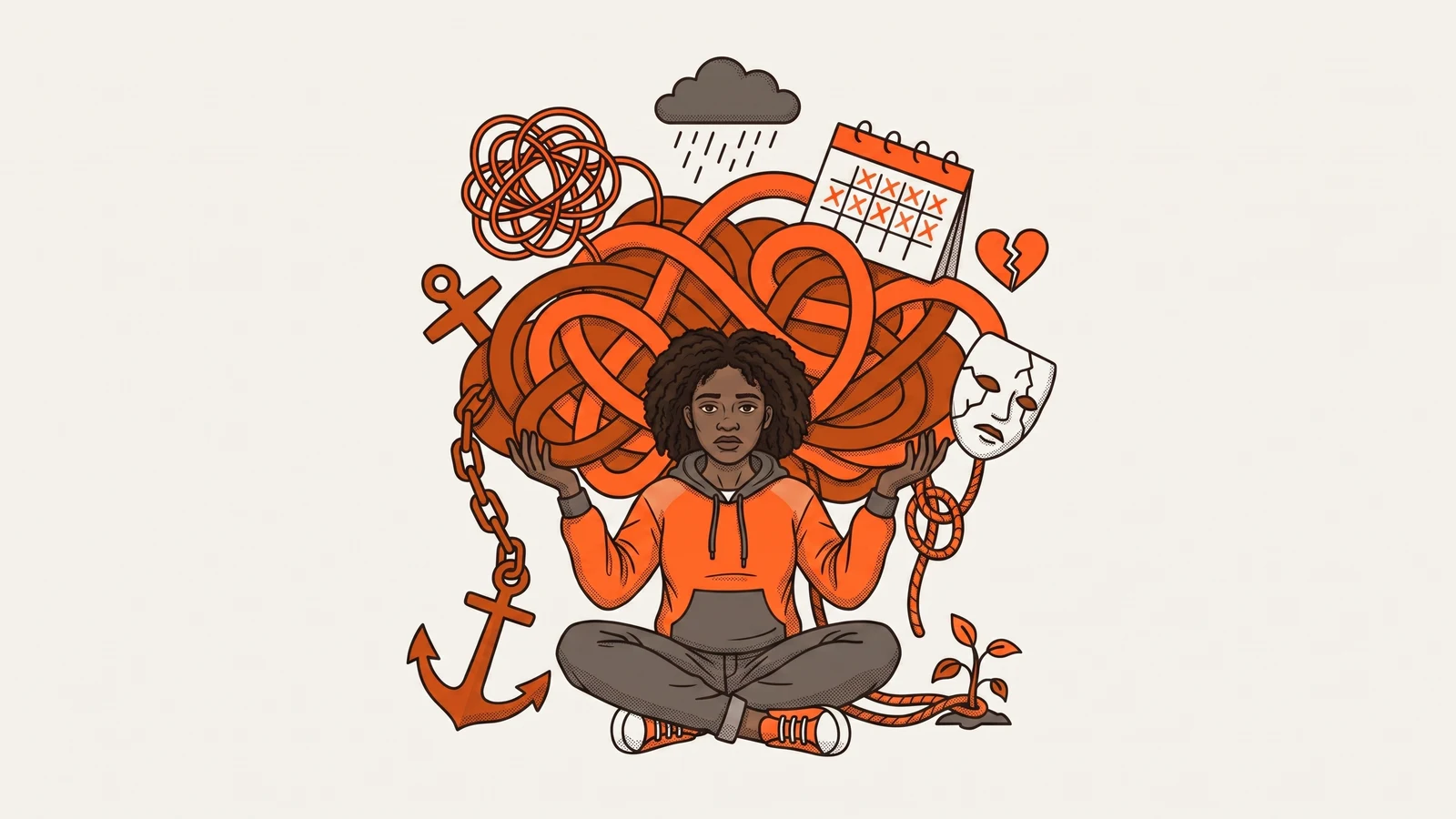
You know your teen better than any list of "life skills every teenager needs" ever could. What you're actually looking for isn't a checklist of forty generic skills. It's an answer to a more specific question: what is my teen actually struggling with, and what's the real skill behind it?
Most of what's out there answers the wrong question. Long lists mix laundry and budgeting in with emotional regulation and conflict resolution, with no framework connecting any of it. Here are seven struggles homeschool parents recognize immediately, each one tied to a specific, buildable competency, not a vague category.
1. They Only See What's Wrong With Them
Your teen handles real things well, staying steady when a friend is falling apart, sticking with something tedious until it's done, owning a mistake instead of deflecting it. Ask them what they're good at, and none of it comes up. The only thing they can name is what they lack.
This is a gap in Knows Self and Believes in Self and Growth (Identity domain), the ability to recognize existing capacities, not just deficits. Read the full guide: My Teen Only Sees What's Wrong With Them
2. "I Don't Know" Is the Only Answer You Get
Something's clearly wrong. You ask. They shrug, say "I don't know," and go quiet. Then a small frustration erupts out of nowhere twenty minutes later. The feeling was there. The words for it weren't.
This is Understands Emotions and Regulates Emotions (Emotion domain), naming what's happening internally before it builds into something bigger. Read the full guide: Why Your Teen Says "I Don't Know" When You Ask How They're Feeling
3. Nothing Gets Started Unless You're Standing Over Them
The moment you step back, everything stalls. Not because your teen can't do the work, because starting it, tracking it, and finishing it without an external push is its own separate skill, and it hasn't been built yet.
This is Takes Initiative (Thought domain) and Sustains Determination (Mindset domain), self-direction, which develops gradually and has to be supported, not assumed. Read the full guide: Why Your Teen Won't Start Anything Unless You're Standing Over Them
4. They Seem Lonely, and You're Not Sure How to Help
Your teen wants real friends. They're just not sure how to make or keep them, and without a daily group of peers built into the day the way school provides one, you're the one left wondering what to do about it.
This is Builds Relationships and Communicates (Social domain). Read the full guide: Homeschool Socialization: Helping a Lonely Teen Find Real Friends
5. Anything Hard Gets Dropped Immediately
The moment something gets difficult, it's "I can't" or "I'm not smart enough", not a real attempt, then a retreat. Difficulty isn't a wall to your teen right now. It's a stop sign.
This is Embraces Challenge (Values domain) and Sustains Optimism (Mindset domain), closely tied to what your teen believes about their own ability to grow. Read the full guide: Why Your Teen Gives Up the Moment Things Get Hard
6. Change Makes Them Tense Up or Shut Down
Friendships shift. New situations show up unannounced. What's expected of them keeps moving. Instead of adjusting, your teen tenses up or goes quiet, every time, not just occasionally.
This is Demonstrates Adaptability (Mindset domain), supported by Thinks Flexibly and Regulates Emotions. Read the full guide: Helping Your Teen Adapt to Constant Change Without Shutting Down
7. They're Great in Practice, and Then the Moment Arrives
If your teen competes or performs (sports, music, theater) you've watched them nail something in rehearsal, over and over, only to tighten up when it actually counts. This one has its own dedicated guide, since it shows up differently for athletes and performers than it does for everyday struggles.
This is Manages Stress and Pressure (Emotion domain) and Focuses (Thought domain). Read the full guide: Mental Performance Training for Teen Athletes
How Altitude Connects to Each of These
Every struggle above maps to specific competencies inside the Whole Human Framework, 31 competencies across six domains: Thought, Emotion, Social, Values, Mindset, and Identity. Your teen starts with the Whole Human Assessment, a strengths-based profile that shows where they're already strong and where there's real room to grow, never a grade, never compared to another teen. From there, Precision Development matches them with their Altitude Coach, and they build the specific competencies behind whichever struggle sounds most familiar, through experiences ranging from short guided practices to multi-week courses.
Frequently asked questions
What are life skills and why are they important for teens?
Life skills are the practical, emotional, and social competencies that let a young person function and thrive, separate from academics. They're what determines how a teen handles pressure, connects with others, and makes decisions, and they're just as buildable as any academic skill.
How do I know what life skills my teen needs to build?
Start with what you're actually observing, a specific, recognizable pattern, not a generic category. The seven struggles above are a starting point; a structured assessment across all 31 competencies gives a fuller picture.
What is competency-based learning for homeschool?
It's an approach that names specific, observable abilities (like Resolves Conflicts or Sustains Determination) and builds them through repeated practice and reflection, rather than covering broad, undefined categories like "social skills" or "emotional intelligence."
Is this the same as social-emotional learning (SEL)?
SEL typically covers two domains: Emotion and Social. A whole-human approach covers four more (Thought, Values, Mindset, and Identity) for a fuller picture of what actually shows up in a teen's daily struggles.
My teen doesn't fit neatly into any one of these seven. What then?
These seven cover the Year-1 launch domains, but they're not exhaustive. The Whole Human Assessment covers all 31 competencies, so it can surface a struggle that doesn't fit neatly into any single category here.
Can I use scholarship funds for this kind of curriculum?
Families using Step Up for Students (Florida) or the Georgia Promise Scholarship can typically use funds for curriculum and educational software, categories that include competency-based platforms alongside traditional academic materials.
Related Resources
From Altitude:
- What Is Whole-Human Development? A Guide for Homeschool Parents
- What Is Altitude? Where Becoming Begins
- Join the waitlist
Further Reading:
- Mindset: The New Psychology of Success by Carol Dweck. Foundational research on believing ability can grow through effort, relevant to nearly every struggle above.
- Grit: The Power of Passion and Perseverance by Angela Duckworth. On sustaining effort through the kind of flat, difficult stretches several of these struggles describe.
Your teen already has real capacities. The question is which ones need deliberate support right now. Altitude maps every one of these struggles to a specific, buildable competency inside the Whole Human Framework.
Altitude opens to founding families in January 2027. Join the waitlist to be among the first families in Florida and Georgia.