

Why Your Teen Says "I Don't Know" When You Ask How They're Feeling
Your teen shuts down instead of naming what's wrong, then a small thing sets them off later? Here's what's actually happening, and how to help.
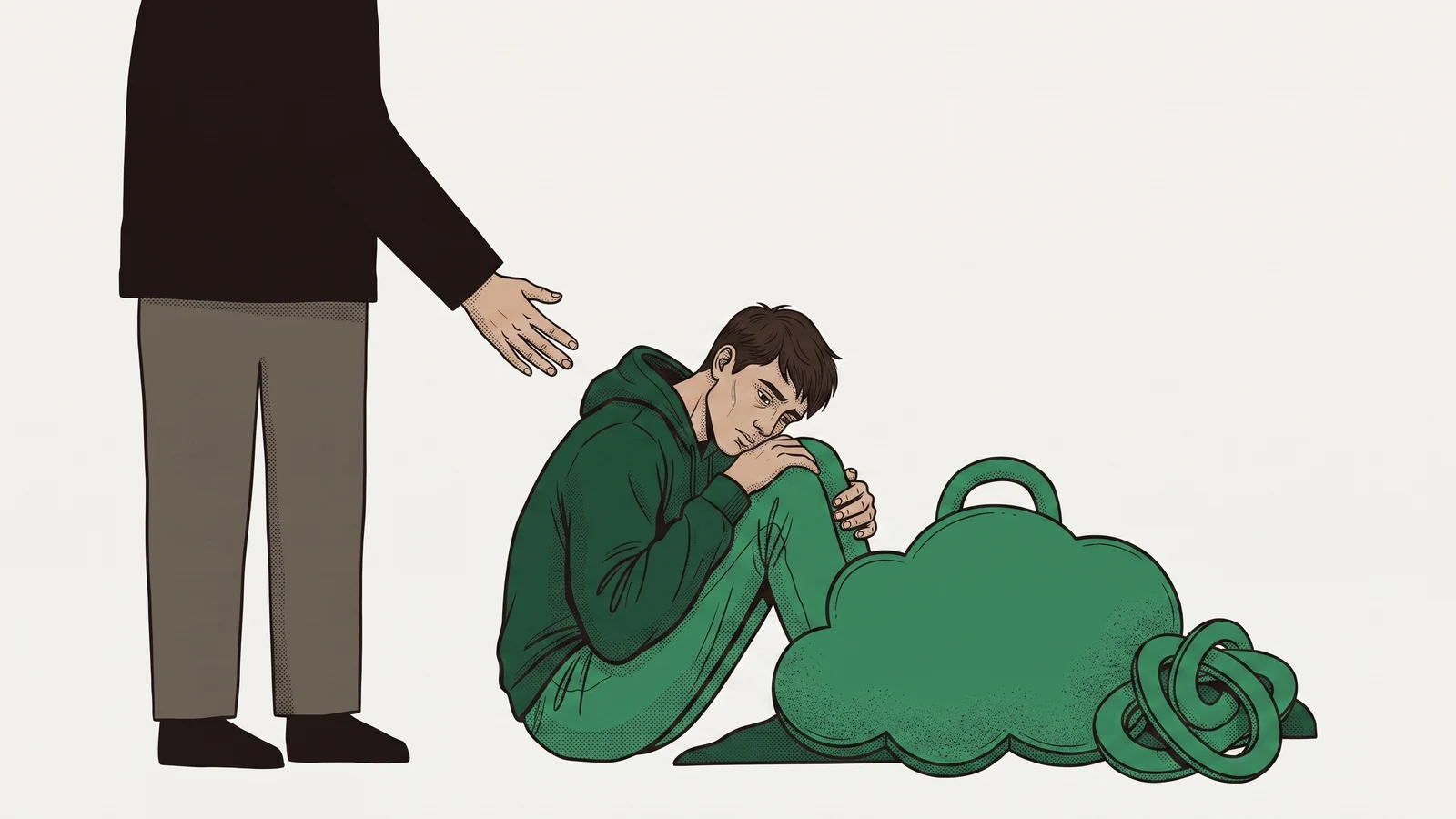
Something is clearly wrong. You ask what's going on. "I don't know," and the door closes. Twenty minutes later, a completely unrelated small thing (a lost sock, a typo in a text) sets off a reaction that's way bigger than the moment calls for. The feeling was there the whole time. The words for it weren't.
"I Don't Know" Is Often Literally True
It's tempting to hear "I don't know" as deflection. Often, it isn't. It's accurate. Naming an emotion precisely is a skill, and it develops unevenly. A teen can feel something intensely and still lack the specific word for it, especially when it's a mix of feelings at once (embarrassed and relieved, proud and disappointed). Without the word, the feeling doesn't disappear. It just doesn't get processed, until something smaller triggers the release.
What Understands Emotions and Regulates Emotions Actually Mean
Understands Emotions is recognizing and accurately naming what you and others are feeling, including mixed or complicated emotions, not just "good" or "bad," but the specific shade of it. Regulates Emotions is managing what you feel and choosing how to respond, even when the feeling is strong. These are separate skills. A teen can understand what they feel and still struggle to regulate it, or vice versa, which is why naming the emotion accurately is usually the first move, not the last.
How to Open the Door Without Forcing It
Trying to extract an answer in the moment rarely works. What tends to work better: naming what you're observing without demanding a response ("You seem pretty quiet since dinner"), offering a menu instead of an open question ("Frustrated? Embarrassed? Something else?"), and giving space for the answer to come later, once the feeling has had time to become nameable.
Frequently asked questions
What is emotional intelligence and how do you teach it to teenagers?
Emotional intelligence includes recognizing and naming what you and others feel (Understands Emotions) and managing your response to those feelings (Regulates Emotions). It's taught through practice, naming feelings in real moments, not through a single conversation or lecture.
Why won't my teen tell me how they're feeling?
Often it's not resistance. It's that the feeling doesn't have a name yet. Offering specific options instead of an open-ended question, and giving space instead of pushing for an immediate answer, tends to open things up more than direct questioning.
Is this the same as being emotionally immature?
No. Naming emotions accurately is a distinct, learnable skill, not a maturity level. Many capable, mature teens simply haven't had explicit practice putting language to what they feel.
What's the connection between "I don't know" now and the outburst later?
An unnamed feeling doesn't go away. It often surfaces later, triggered by something unrelated and disproportionate to that moment. Naming the original feeling earlier tends to reduce that delayed release.
Related Resources
From Altitude:
- Signs Your Teen Needs Life Skills Support
- Emotional Intelligence for Teens: A Guide to the Emotion Domain
- Join the waitlist
Further Reading:
- Permission to Feel by Marc Brackett. On building emotional vocabulary and regulation as distinct, teachable skills.
- The Whole-Brain Child by Daniel J. Siegel and Tina Payne Bryson. On how naming an experience changes how it's processed.
The feeling was there. Altitude helps build the words for it, through Understands Emotions and Regulates Emotions, practiced across real experiences, not a single conversation.
Altitude opens to founding families in January 2027. Join the waitlist to be among the first families in Florida and Georgia.