

What Is Whole-Human Development? A Guide for Homeschool Parents
Whole-human development means growing the whole teen, not just academics. Here are the six domains and 31 competencies that make up a capable young person.
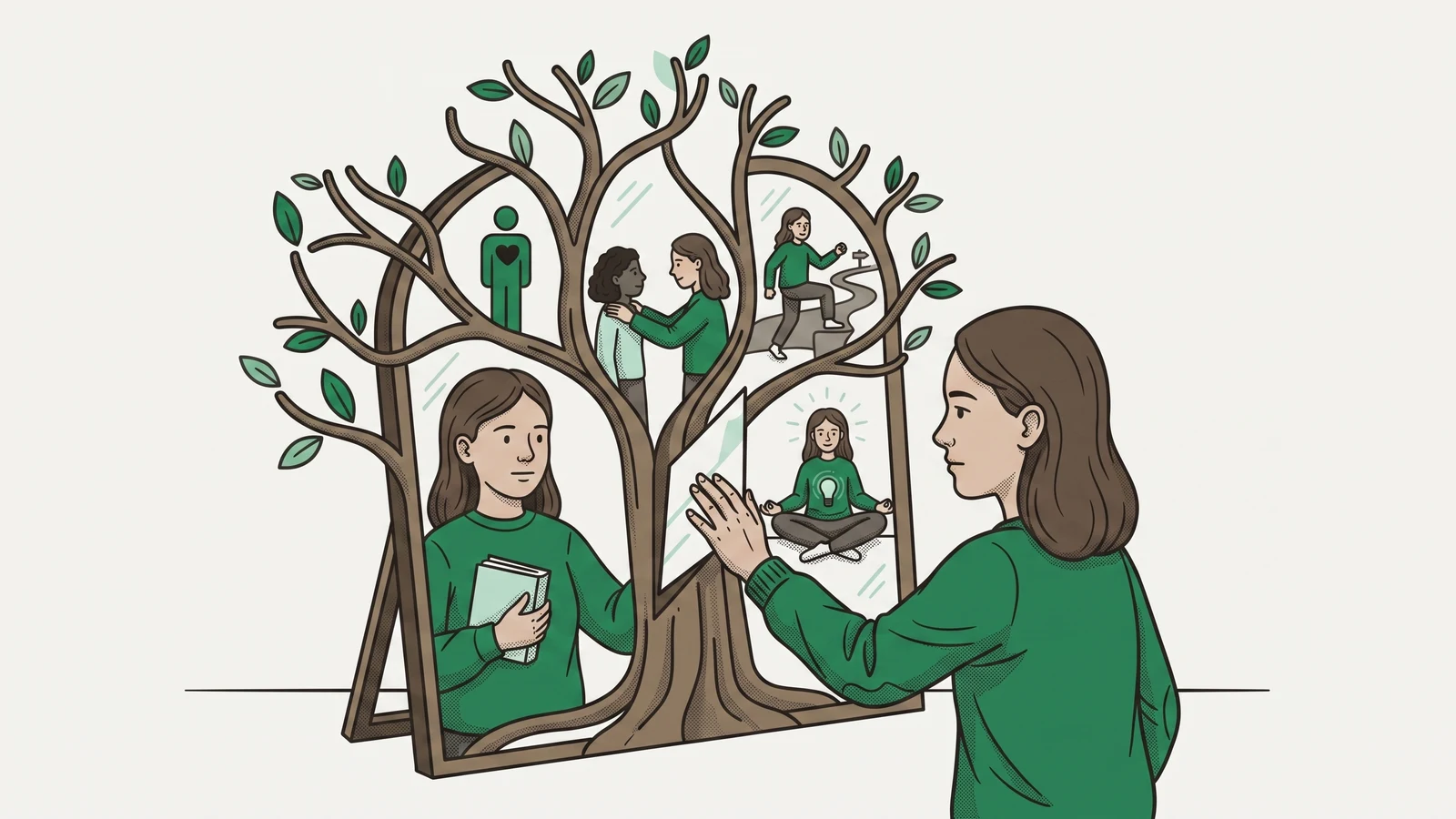
Your teen is more than a test score. You already know that. It's part of why you chose to homeschool in the first place.
But when you go looking for a way to actually develop the rest of who they are (how they handle conflict, manage stress, know themselves, lead others), the search falls apart fast. Most of what's out there treats "development" as an academic concept or a clinical one. Almost nothing treats it as the practical, daily work of helping a young person become a capable human.
That work has a name: whole-human development. Here's what it means, and why it might be the missing piece in your homeschool.
What Is Whole-Human Development?
Whole-human development is the intentional growth of every part of a young person, not just how they think academically, but how they feel, relate, decide, and act in the world.
It treats capabilities like managing emotions, resolving conflict, and knowing yourself as real, buildable skills, the same way reading and math are skills. These aren't fixed traits a teen either has or doesn't. They're competencies that can be assessed, practiced, and strengthened over time.
Traditional models of human development describe what changes during adolescence. Whole-human development goes a step further: it gives you a structured way to actively build those capabilities, on purpose, during the years they matter most.
The Six Domains of Whole-Human Development
At Altitude, whole-human development is organized through the Whole Human Framework, 31 competencies across six domains. Each domain represents a different dimension of becoming a capable person.
- Thought: how a young person focuses, plans, and problem-solves. Competencies include Focuses, Plans and Completes, Thinks Critically, and Thinks Creatively.
- Emotion. How they understand and manage what they feel: Understands Emotions, Regulates Emotions, Practices Empathy, and Manages Stress and Pressure.
- Social: how they connect, communicate, and navigate relationships, through Reads Social Cues, Resolves Conflicts, Builds Relationships, Collaborates, Leads, and Communicates.
- Values. How they act with integrity and purpose: Acts with Integrity, Strives for Excellence, Contributes to Community, and Loves Learning.
- Mindset. How they approach challenge, change, and growth: Sustains Optimism, Practices Gratitude, Engages Fully, Demonstrates Adaptability, and Sustains Determination.
- Identity: how they know and develop themselves, through Knows Self, Believes in Self and Growth, Lives with Purpose, and Cares for Self.
Together, these six domains form a complete picture of what it means to grow as a human being, not a collection of disconnected activities, but one connected developmental system.
Why Whole-Human Development Matters More for Teens
Adolescence (ages 13 to 18) is a deeply formative window for this kind of growth. It's when young people are forming their identities, gaining independence, and learning to navigate a more complex social world all at once.
It's also exactly when most structured development stops. Academic content keeps coming, but the competencies that shape how a young person actually moves through life (how they recover from a setback, communicate when something's hard, or stay determined when motivation fades) are usually left to chance.
Whole-human development closes that gap on purpose. And homeschool families are uniquely positioned to lead it. Without the constraints of bell schedules and standardized testing, you have the freedom to ask a bigger question than school can: not just what does my teen know, but who is my teen becoming?
How Whole-Human Development Is Different from SEL
If you've researched this before, you've likely encountered social-emotional learning, or SEL. It's a meaningful framework, but it covers a narrower slice.
SEL focuses primarily on the Emotion and Social domains. Whole-human development includes those, then goes further, covering Thought, Values, Mindset, and Identity as well. That's the difference between developing two dimensions of a young person and developing all six.
Whole-human development isn't a replacement for SEL. It's what becomes possible when development is allowed to cover the full picture of a person.
Frequently asked questions
What is whole-human development?
Whole-human development is the intentional growth of every part of a young person (how they think, feel, relate, act, and understand themselves) not just their academic ability. It treats capabilities like emotional regulation and conflict resolution as buildable skills that can be practiced and strengthened over time.
What are the domains of whole-human development?
At Altitude, whole-human development is organized into six domains: Thought, Emotion, Social, Values, Mindset, and Identity. Together they hold 31 specific competencies that make up a capable, well-rounded young person.
How is whole-human development different from social-emotional learning (SEL)?
SEL primarily addresses two areas, emotional and social skills. Whole-human development includes those and adds four more domains: Thought, Values, Mindset, and Identity. It's a more complete model of who a young person is becoming.
Is whole-human development only for homeschoolers?
No, but homeschool families are especially well-positioned for it. Without standardized schedules and testing pressure, homeschool parents have the flexibility to prioritize competencies that traditional settings often leave untouched.
At what age should whole-human development start?
The 13–18 window is ideal, because identity formation, growing independence, and social complexity all accelerate at once during adolescence. That said, it's never too early or too late to begin.
Related Resources
From Altitude:
- What Is the Whole Human Framework?
- How the Six Domains Work Together: Why Your Teen Needs All of Them
- The 31 Competencies: Why They're Different from Life Skills
- Join the waitlist
Further Reading:
- The Whole-Brain Child by Daniel J. Siegel & Tina Payne Bryson. A clear look at how the developing adolescent brain integrates thought and emotion.
- How to Raise an Adult by Julie Lythcott-Haims. On building independence and capability in teens, relevant to the agency at the heart of whole-human development.
- The Teenage Brain by Frances E. Jensen. Accessible reading on adolescence and why these years are a critical window.
Your teen is already becoming. Whole-human development is simply doing it on purpose, naming the competencies that matter, and building them with intention across all six domains.
Altitude opens to founding families in January 2027. Join the waitlist to be among the first families in Florida and Georgia.