

Mental Performance Training for Teen Athletes
Your athlete nails it in practice but freezes when it counts? Mental performance training builds the focus and composure that hold up under pressure.
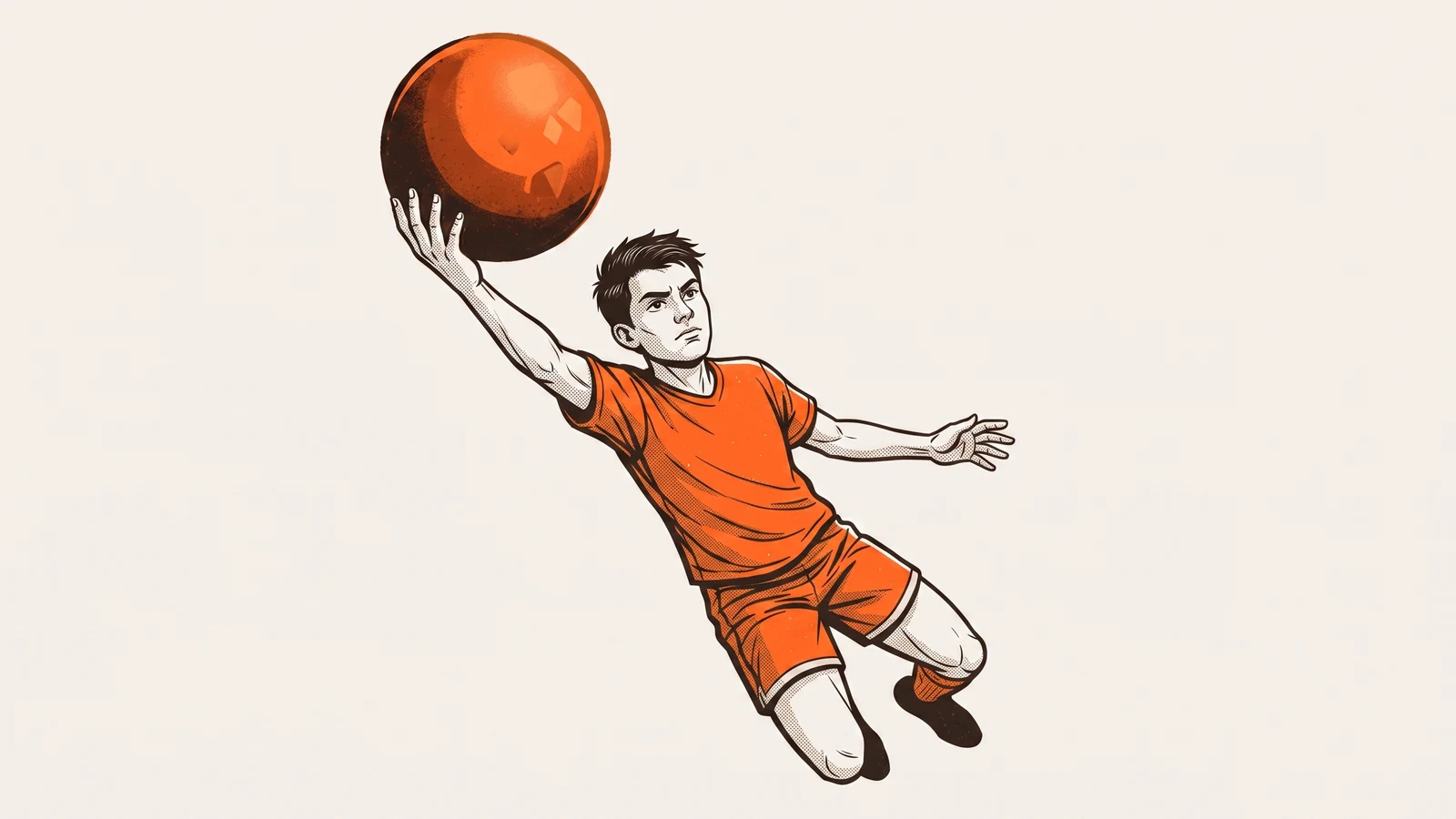
Your athlete nails it every day in practice. The shot, the routine, the line, clean, automatic, second nature. Then the whistle blows, the crowd goes quiet, and the moment asks for something practice never did.
That gap (between what your athlete can already do and what it takes to do it while people are watching) has a name. It's called mental performance, and it's trainable.
What Is Mental Performance Training for Teen Athletes?
Mental performance training is the deliberate practice of the cognitive and emotional skills that let an athlete execute under pressure what they've already built in practice, focus, composure, self-talk, recovery after a mistake. It's the mental side of the same equation that physical training addresses on the field.
Most people hear "mental performance" and picture something for professionals or Olympic hopefuls. It isn't. Every young athlete has moments where the stakes rise and the execution drops, the free throw with the game on the line, the routine in front of judges, the audition after months of rehearsal. Mental performance training is what closes that gap, at any level of competition.
Why the Gap Between Practice and Competition Is the Real Opponent
Here's what's actually happening: skills built in low-stakes practice don't automatically transfer to high-stakes competition. Your athlete's technical ability develops on one track. Their capacity to stay composed, focused, and confident while people are watching develops on a separate track, and it doesn't move at the same pace.
That's not a flaw in your athlete. It's the normal shape of adolescence. The gap between what a teen can do and what they can execute under evaluation is the single most common mental barrier young athletes and performers report, bigger than talent, bigger than physical conditioning. Closing that gap is a specific, practicable skill set, not a personality trait some athletes have and others don't.
What Mental Skills Do Teen Athletes Actually Need?
Two competencies do most of the work in high-pressure moments:
Manages Stress and Pressure (Emotion domain). This is the ability to recognize stress as it shows up in the body, use real strategies to reset in the moment, and pace effort so pressure doesn't tip into shutdown. It's the difference between a missed shot that stays a missed shot and one that snowballs into three more.
Focuses (Thought domain). This is bringing full attention to the moment that's in front of you, not the last mistake, not the crowd, not what happens if this goes wrong. Athletes who focus well use specific strategies to return their attention when it drifts, rather than white-knuckling their way through distraction.
A handful of other competencies support these two directly: Regulates Emotions, Practices Self-Control, Believes in Self and Growth, and Sustains Optimism. Together, they're what separates an athlete who can perform in the gym from one who can perform anywhere.
How Is Mental Performance Different From Mental Health?
This is a real and useful distinction, not a technicality. Mental health is about overall emotional wellbeing: how someone is doing in general. Mental performance is narrower and more practical: the specific skills that let someone execute under pressure in a defined moment, like a game, a meet, or a recital.
An athlete can be doing well overall and still struggle with performance anxiety in competition. The two aren't the same thing, and they don't need the same kind of support. Mental performance work is skill-building, not treatment, practice, not diagnosis.
Why Most Mental Performance Support Isn't Built for Teens
Look at what's actually available right now, and a pattern shows up fast: most mental performance support comes through individual coaching sessions, priced and scheduled like therapy, or through programs built for adult professionals and adapted downward. What's missing is something structured, self-paced, and built specifically for a 13-to-18-year-old, not a shorter version of an adult program, not a handful of tips repackaged as a workshop.
That's the gap Altitude fills. Every mental performance competency your athlete needs (Manages Stress and Pressure, Focuses, and the competencies that support them) is already part of the Whole Human Framework: 31 competencies across six domains, built for how adolescents actually develop, not adapted from something built for someone else.
How Altitude Builds Mental Performance in Young Athletes
Your athlete starts with the Whole Human Assessment, a strengths-based profile across all 31 competencies that shows where they're already strong and where there's room to grow, including the specific competencies that show up under pressure. It's not a grade, and it's never compared to other athletes.
From there, Precision Development matches your athlete with their Altitude Coach, one consistent guide-on-the-side, in a voice that fits how they take in feedback, whether that's direct and high-standards or warm and steady. Through experiences ranging from short guided practices to multi-week courses, your athlete builds Manages Stress and Pressure and Focuses the same way they build a jump shot or a routine: through repetition, feedback, and reflection, not a single conversation before a big game.
This is where the felt experience (the freeze, the tightening, the overthinking) connects to something buildable. Not a fix. A practice.
What This Looks Like for a Homeschool Athlete
Many families in Florida and Georgia are already homeschooling specifically to make room for serious athletic training, early mornings at the rink, travel for meets, flexible afternoons for practice. For these families, whole-human development and athletic development aren't competing priorities. They're the same project, viewed from two angles.
Altitude is structured to work alongside that schedule, not against it, and for families using Step Up for Students or the Georgia Promise Scholarship, it's built to qualify as curriculum and educational software, the same as it would for any other homeschool family.
Frequently asked questions
What is mental performance training for athletes?
It's the deliberate practice of the cognitive and emotional skills (focus, composure, stress management, self-talk) that let an athlete execute under pressure what they've already built in practice. It's trained the same way physical skill is: through repetition and feedback.
How do I help my teen athlete build mental toughness?
Start by naming the specific skill, not the outcome. "Mental toughness" is really several distinct competencies (Manages Stress and Pressure, Focuses, Regulates Emotions) each of which can be practiced on its own, with real strategies, not just willpower.
What's the difference between mental health and mental performance?
Mental health is a young person's overall emotional wellbeing. Mental performance is the narrower, specific set of skills that let someone execute well in a high-pressure moment, like a competition. An athlete can be doing well overall and still need to build performance-specific skills.
What mental skills do teen athletes need most?
Manages Stress and Pressure and Focuses do the most work in competition, supported by Regulates Emotions, Practices Self-Control, Believes in Self and Growth, and Sustains Optimism.
Is mental performance training only for elite athletes?
No. Any young athlete or performer who has felt the gap between practice and competition (nailing it when no one's watching, tightening up when it counts) can build these skills. It isn't reserved for a competitive tier.
How is Altitude's approach different from a mental performance coach?
A coach typically works one-on-one, session by session, at a per-session cost. Altitude is a structured, self-paced platform: the Whole Human Assessment, a personalized development path, and an Altitude Coach matched to how your athlete learns, covering mental performance as part of whole-human development, not a separate add-on.
Can homeschool student-athletes use scholarship funds for mental performance training?
Altitude is structured to qualify as curriculum and educational software under Step Up for Students (Florida) and the Georgia Promise Scholarship, the same as it does for any homeschool family, whether your teen is homeschooling for flexibility, faith, or full-time athletics.
What age should a young athlete start mental performance training?
Ages 13–18 are a strong window to start intentionally. This is when the gap between technical skill and the self-regulation needed to execute it under pressure tends to be most visible, and when it's most responsive to structured practice.
Related Resources
From Altitude:
- Performance Anxiety in Teen Athletes
- The Best Homeschool Curriculum for Student Athletes
- Join the waitlist
Further Reading:
- The Champion's Mind by Jim Afremow, Ph.D.. Grounded, athlete-specific mental skills work that mirrors the practice-to-competition gap this post addresses.
- Mindset: The New Psychology of Success by Carol Dweck. The research behind what it means to believe ability can grow through effort, directly underneath Believes in Self and Growth.
- Grit: The Power of Passion and Perseverance by Angela Duckworth. On sustained effort through setbacks, relevant to the determination that supports performance under pressure.
Your athlete already has what it takes in the gym. Altitude helps build what it takes when the whistle blows, through the Whole Human Assessment, an Altitude Coach matched to how they learn, and a development path across the competencies that hold up under pressure.
Altitude opens to founding families in January 2027. Join the waitlist to be among the first families in Florida and Georgia.