

Performance Anxiety in Teen Athletes
Your athlete nails it in practice, then freezes when it counts. Here's how to support a teen through performance anxiety without hovering.
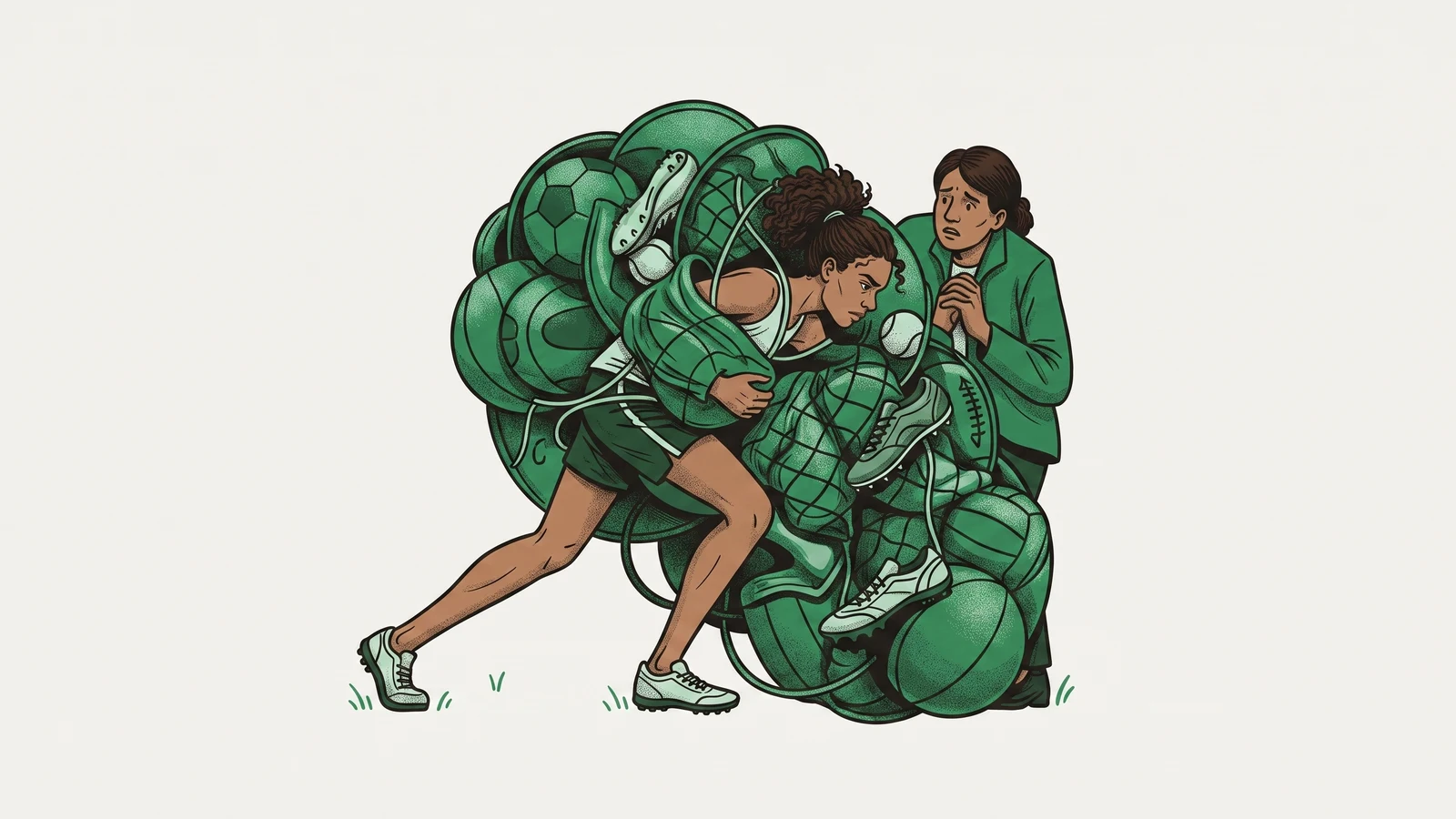
You've watched your athlete nail this a hundred times before. Then the moment arrives (the game, the meet, the tryout), and their body tenses, their mind speeds up, and the performance that lives in them during practice doesn't quite reach the surface. You want to help. You're not always sure what helping looks like, or whether stepping in will make it worse.
What Is Performance Anxiety in Teen Athletes?
Performance anxiety is the gap between what an athlete can do and what shows up when the stakes rise and people are watching. It's not a character flaw and it's not rare, some version of it touches almost every competitive athlete at some point. The tell isn't nervousness itself; a little nervous energy is normal and can even sharpen focus. The tell is when tension crosses over into tightening up, overthinking, or a performance that consistently falls well below what practice shows.
Why "Just Relax" Doesn't Work
Telling an anxious athlete to relax rarely works, because the advice skips the actual skill. Composure under pressure isn't a mood you talk your way into. It's built the same way a jump shot or a routine is built: through specific strategies, practiced repeatedly, until they're available under stress instead of only in calm conditions.
That's why generic encouragement ("you've got this," "just breathe") often falls flat in the moment. What holds up under pressure is a strategy your athlete has already practiced enough times that it's automatic, a way to reset attention, a specific breath pattern, a phrase that brings focus back to the present play instead of the last mistake or the crowd.
How to Support Your Athlete Without Hovering
Your role matters here, but it's a narrower role than it might feel like in the moment. A few things that actually help:
Ask about process, not outcome. "What are you going to focus on today?" opens a different conversation than "Are you going to win?" One points your athlete toward something they control. The other adds weight to something they don't.
Debrief after, not during. The car ride home right after a rough performance is rarely the moment for a breakdown of what went wrong. Give it space. Let your athlete bring it up when they're ready to actually reflect, not just react.
Name the skill, not the feeling. "You handled the pressure in the third quarter" says something different than "You seemed less nervous today." One reinforces a specific, repeatable competency. The other centers a feeling your athlete may not have full control over yet.
When Performance Anxiety Needs More Than Skill-Building
Most performance anxiety is situational. It shows up before competition and eases once your athlete gets going or the event ends. That kind responds well to practiced mental performance skills: Manages Stress and Pressure, Focuses, Regulates Emotions.
Some anxiety is more persistent. It doesn't ease with the event, spills into school or friendships, or shows up as dread that doesn't lift. That's a different conversation, and it deserves support from a mental health professional, not a competency-development platform. Altitude builds the skills that help an athlete perform under normal pressure. It isn't a therapy product, and knowing the difference matters for your athlete.
How Altitude Builds the Skills That Ease Performance Anxiety
Your athlete starts with the Whole Human Assessment, a strengths-based look across all 31 competencies, including the ones most connected to performing under pressure. From there, Precision Development matches them with their Altitude Coach, and they build Manages Stress and Pressure and Focuses through repeated, structured practice, not a single pep talk before a big game, but the same kind of repetition that builds any other skill.
Frequently asked questions
How do teen athletes deal with performance anxiety?
By practicing specific strategies (recognizing stress in the body early, using a reset routine, and returning attention to the present play) until those strategies are available under pressure, not just in calm practice conditions.
How do I help my teen athlete without hovering?
Focus your questions on process instead of outcome, give space after a tough performance instead of debriefing immediately, and name the specific skill your athlete used rather than commenting on how nervous they seemed.
Is performance anxiety the same as being unprepared?
No. An athlete can be fully prepared technically and still experience performance anxiety: the gap is in execution under pressure, not in the underlying skill or preparation.
When should performance anxiety be a concern beyond sport?
When the anxiety doesn't ease after the event, spills into school, friendships, or daily mood, or shows up as ongoing dread. That pattern is worth bringing to a mental health professional rather than addressing through skill-building alone.
How is Altitude different from a sports psychology session?
A session is a single conversation, usually at a per-session cost. Altitude is a structured, self-paced path (an assessment, a personalized development plan, and an Altitude Coach) built for repeated practice of the specific competencies that hold up under pressure.
Related Resources
From Altitude:
- Mental Performance Training for Teen Athletes
- How to Help Your Teen Manage Stress and Pressure
- Join the waitlist
Further Reading:
- The Champion's Mind by Jim Afremow, Ph.D.. Practical strategies for the practice-to-competition gap this post addresses.
- Mindset: The New Psychology of Success by Carol Dweck. Foundational research on how belief in growth shapes performance under pressure.
Your athlete already knows how to perform. Altitude helps build what holds up when the moment gets loud, through the Whole Human Assessment, an Altitude Coach matched to how they learn, and practiced skills in Manages Stress and Pressure and Focuses.
Altitude opens to founding families in January 2027. Join the waitlist to be among the first families in Florida and Georgia.