

My Teen Only Sees What's Wrong With Them
Your teen handles real things well but can't name a single strength? Here's how to help them recognize what they already have going for them.
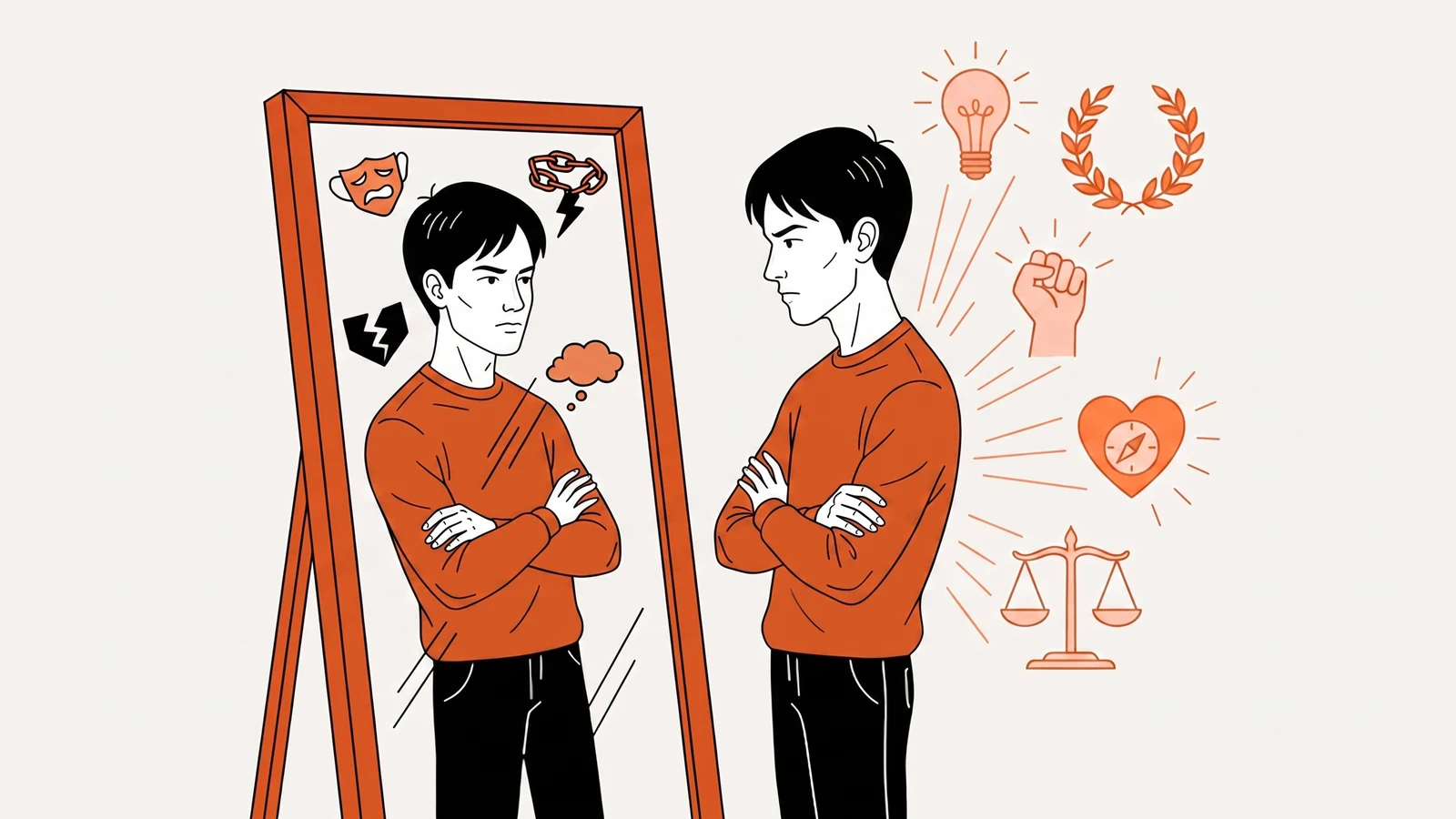
Ask your teen what they're good at, and watch what happens. A long pause. Maybe a shrug. Maybe "I don't know, nothing really." Meanwhile you've watched them stay steady when a friend was falling apart, keep going on something tedious long after most people would've quit, and own a mistake instead of making excuses. None of that comes up. The only thing they can name easily is what's wrong.
Why Teens Default to Naming Their Flaws
This isn't a confidence problem you can talk your way out of. Most of what a teen hears (grades, scores, feedback) is structured around what's wrong or what's missing. Strengths rarely get the same explicit naming. So a teen can be genuinely good at something and never have language for it, because no one's pointed at it directly and said what it was.
Why Praise Isn't the Same as Recognition
"You're so smart" or "great job" doesn't actually build the skill of self-recognition. It's praise your teen can't independently repeat to themselves later. What works differently is naming the specific thing: not "you did great," but "you stayed calm when your friend was spiraling, that's a real capacity, and it's called Knows Self and Regulates Emotions working together." Specific naming gives a teen language they can use on their own, the next time it happens without you there to say it.
What This Actually Is: Knows Self and Believes in Self and Growth
These are two distinct, named competencies in the Identity domain. Knows Self is the ability to recognize your own traits, values, and patterns with honest reflection, not guessing, not assuming, actually knowing. Believes in Self and Growth is trusting that ability can be built through effort, not fixed from birth. A teen who can only name flaws is often missing both: they haven't built the habit of noticing their own capacities, and they may not fully believe those capacities can grow either way.
How to Start Naming What's Already There
Point to specific moments, not general traits. "You didn't walk away from that hard conversation" is more useful than "you're brave." Ask reflective questions instead of supplying answers: "What did you do there that actually worked?" gets a teen practicing the skill of self-recognition themselves, rather than just receiving your assessment of them.
Frequently asked questions
How do you help a teenager build confidence?
Start with specific, named recognition of things they've actually done, not general praise. Confidence that's rooted in recognizing real capacities holds up better than confidence built on compliments alone.
How do I help my teen see their own strengths?
Name specific moments as they happen, and ask questions that get your teen to identify what worked, rather than telling them. A structured strengths assessment can also give shared language for a conversation that's otherwise hard to start.
Is this the same as self-esteem?
Related, but not identical. Self-esteem is a general sense of self-worth. Knows Self and Believes in Self and Growth are specific, buildable competencies, the ability to accurately recognize your own patterns and trust that they can develop further.
What if my teen resists talking about their strengths?
That resistance often comes from unfamiliarity, not disinterest, most teens simply haven't practiced this. Starting small, with one specific, recent example, tends to work better than a broad "what are you good at" conversation.
Related Resources
From Altitude:
- Signs Your Teen Needs Life Skills Support
- What Is Whole-Human Development? A Guide for Homeschool Parents
- Join the waitlist
Further Reading:
- Mindset: The New Psychology of Success by Carol Dweck. The research behind believing ability can grow through effort.
- The Whole-Brain Child by Daniel J. Siegel and Tina Payne Bryson. On helping young people build language for their own internal experience.
Your teen already has real capacities. Altitude's Whole Human Assessment helps them see it, name it, and build from there, across all 31 competencies.
Altitude opens to founding families in January 2027. Join the waitlist to be among the first families in Florida and Georgia.