

How to Help Your Teen Think Flexibly and Adapt
Flexible thinking is the difference between being stuck and finding another way. Here's how to help your teen build it.
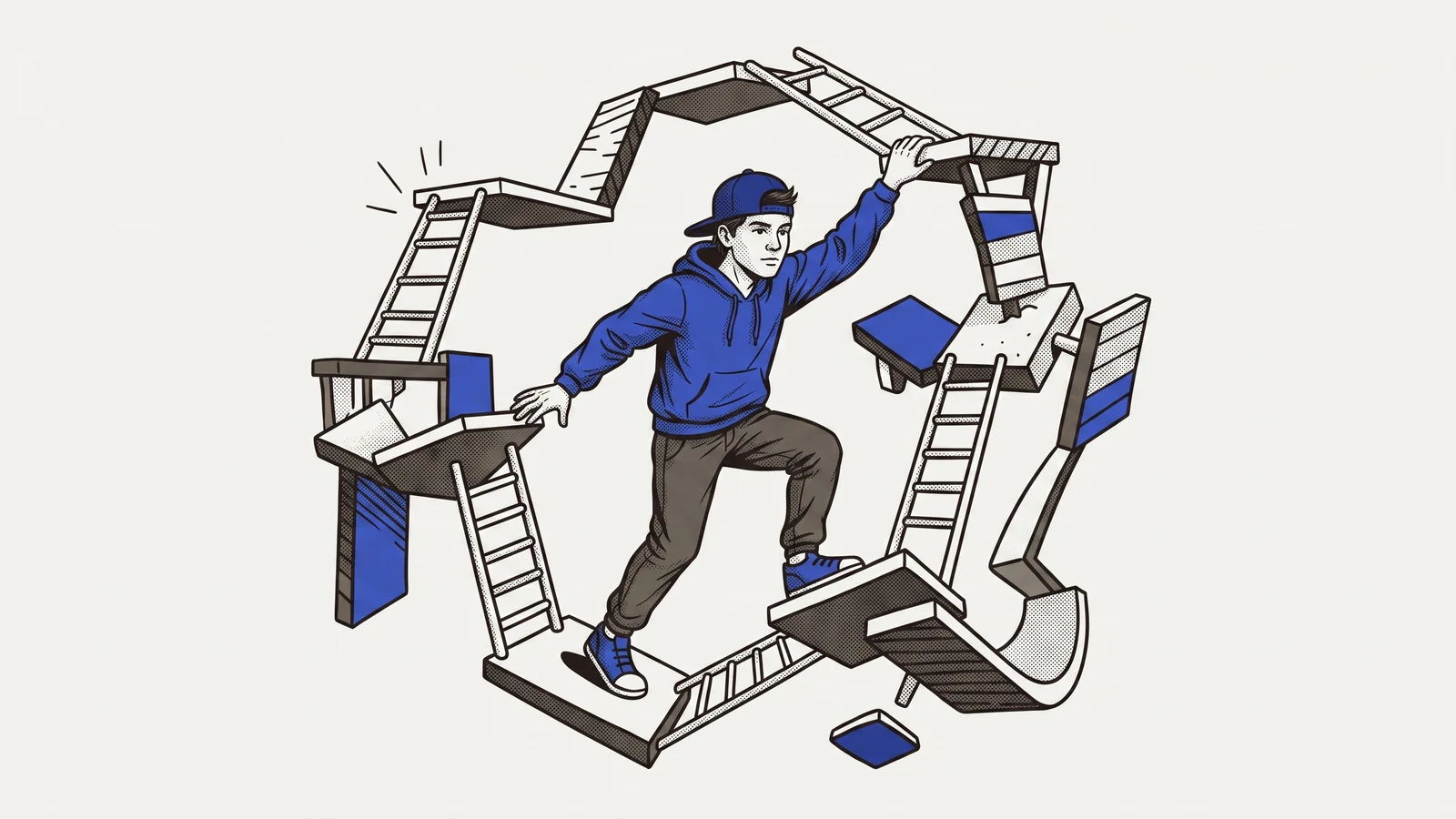
"There's only one way to do this and it's not working." If you've watched a young person get stuck in that loop, you've seen the absence of flexible thinking, and the good news is it's a competency you can help build.
At Altitude, this is Thinks Flexibly, one of seven competencies in the Thought domain. Here's what it means and how to nurture it.
What "Thinks Flexibly" Means
Thinking flexibly is adjusting when circumstances change. For a young person, it shows up as considering more than one way to approach a problem, shifting strategies when the first isn't working, and holding the possibility that their initial take might not be the only valid one.
It's the mental opposite of rigidity, and for many teens, who are still forming strong opinions about how things "should" be, it's a genuinely useful skill to grow.
Why It Matters
Life rarely goes to plan. A young person who can pivot (try another approach, consider another view, adjust when the situation shifts) moves through difficulty with far less friction than one who's locked into a single way. Flexible thinking also underpins problem-solving, empathy, and creativity: all of them require the ability to hold more than one possibility at once.
How to Build It at Home
Ask "what's another way?" When your teen hits a wall, resist handing over the answer. The question itself trains the brain to generate alternatives.
Model changing your mind. Let your young person see you update a view when you get new information: "I thought X, but now I'm seeing it differently." That's flexible thinking in action.
Play with open-ended problems. Puzzles, strategy games, "how many uses can you think of for…", anything with more than one path strengthens the muscle.
Normalize being wrong. A teen who fears being wrong clings to their first answer. When changing your mind is safe and even celebrated, flexibility grows.
Frequently asked questions
How do I help my teen think more flexibly?
Ask "what's another way?" instead of supplying answers, model changing your own mind when you get new information, play with open-ended problems that have more than one path, and make being wrong safe rather than shameful. Flexibility grows when a young person practices generating alternatives and updating their thinking.
Why is my teen so rigid or stubborn about things?
Some rigidity is developmentally normal, adolescence involves forming strong views and testing them. What looks like stubbornness is often a flexible-thinking skill that's still developing. Modeling open-mindedness and rewarding the willingness to reconsider tends to help more than arguing the specific point.
Is cognitive flexibility something you can actually teach?
Yes. While people vary, the ability to consider alternatives, shift strategies, and update a view all strengthen with practice, especially when adults model it and create low-stakes chances to try more than one approach.
Related Resources
From Altitude:
Flexible thinking is the difference between being stuck and finding another way, and every "what's another way?" helps your young person build it.
Altitude opens to founding families in January 2027. Join the waitlist to be among the first families in Florida and Georgia.