

How to Help Your Teen Read Social Cues
Reading social cues is a learnable skill, not a sixth sense. Here's how to help your teen notice and respond to the signals others send.
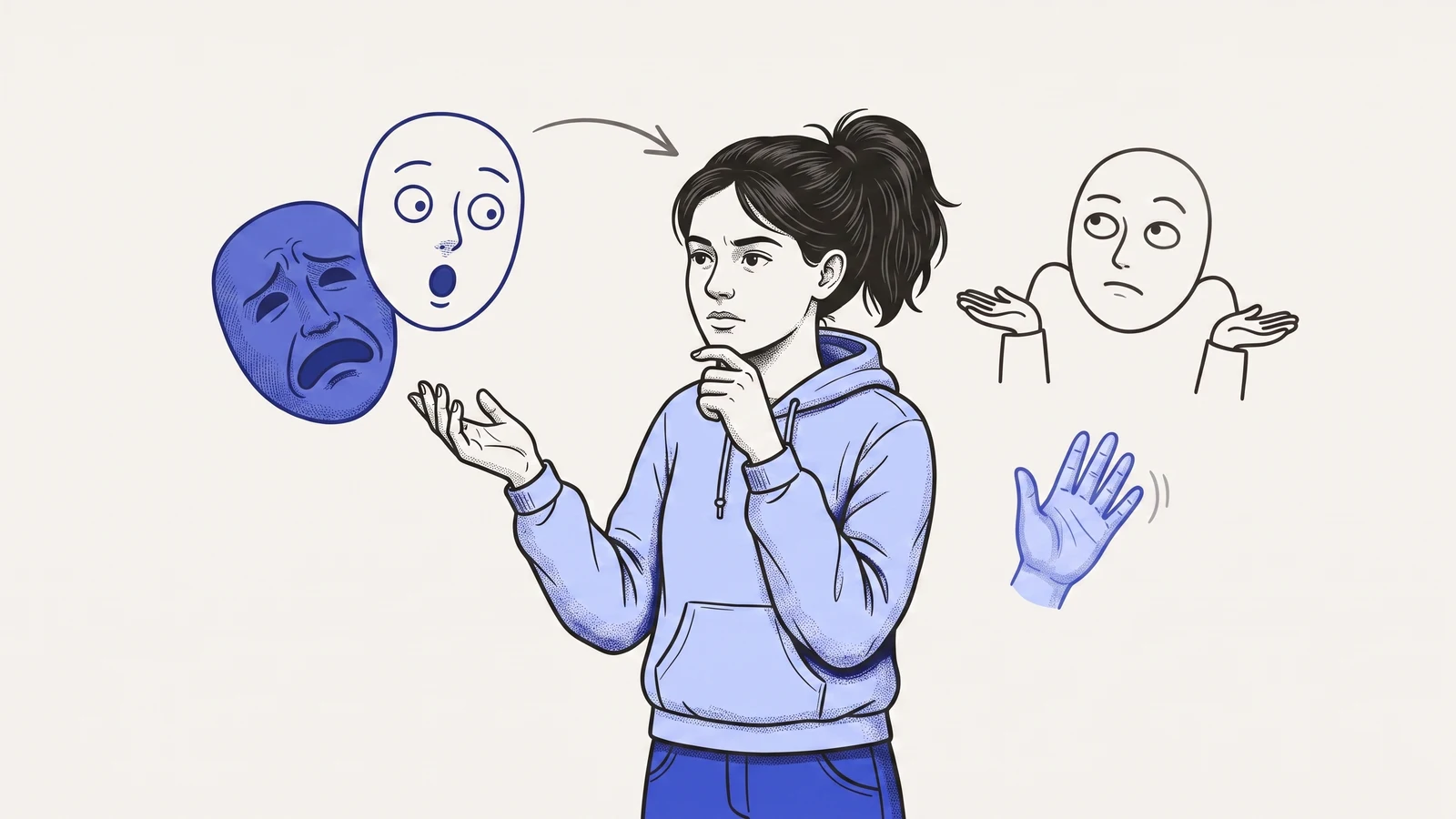
Some teens walk into a room and read it instantly: who's tense, who's left out, when a joke has landed wrong. Others miss those signals entirely. The difference isn't a fixed personality trait. Reading social cues is a skill, and a young person can build it.
At Altitude, this is Reads Social Cues, one of six competencies in the Social domain. Here's what it means and how to help.
What "Reads Social Cues" Means
Reading social cues is picking up on what's happening beneath the surface of an interaction. For a young person, it looks like noticing tone, body language, and facial expressions, sensing the mood of a group, and catching when someone's words and feelings don't quite match, then adjusting how they respond.
It's the input side of every social interaction. A teen can't respond well to what they haven't noticed, which is why this competency quietly underpins so much else.
Why It's the Quiet Foundation
Reading cues comes before nearly every other social skill. Empathy starts with noticing someone's feelings. Good conversation depends on sensing when to talk and when to listen. Even conflict resolution begins with reading the temperature of a room. A young person who's building this competency has the raw information every other social skill runs on.
How to Build It at Home
Narrate cues in real time. "Did you notice how quiet your brother got at dinner? What do you think that was about?" Naming cues as they happen trains a teen to see them.
Read people together, low stakes. Watching a show or sitting in a café, wonder aloud what someone might be feeling from their posture or expression. It's practice without pressure.
Name the mismatch. Point out when words and feelings don't line up: "They said they were fine, but did they seem fine?" Spotting that gap is advanced cue-reading.
Don't over-correct in the moment. If your teen misses a cue socially, resist correcting them in front of others. Debrief later, with curiosity.
Frequently asked questions
How can I help my teen read social cues better?
Narrate cues as they happen ("notice how quiet she got?"), practice reading people together in low-stakes settings like watching a show, and point out when someone's words and feelings don't match. Cue-reading grows through noticing out loud and gentle practice, not through being corrected in the moment.
Why does my teen miss social cues?
Reading cues is a skill that's still developing in adolescence, and some young people simply notice them less readily than others. It's rarely a cause for worry on its own. With practice noticing tone, expression, and group mood, it improves. If a teen consistently struggles across all settings, it can be worth a conversation with a qualified professional.
Can reading social cues actually be taught?
Yes. While people vary in natural sensitivity, the ability to notice tone, body language, and group mood strengthens with practice, especially when an adult narrates cues out loud and creates low-pressure chances to observe them.
Related Resources
From Altitude:
Reading a room is a skill, not a sixth sense, and every time you notice a cue out loud together, your young person gets better at seeing it themselves.
Altitude opens to founding families in January 2027. Join the waitlist to be among the first families in Florida and Georgia.