

How to Help Your Teen Plan Ahead and Finish What They Start
Starting is easy; finishing is the skill. Here's how to help your teen plan ahead and see things through.
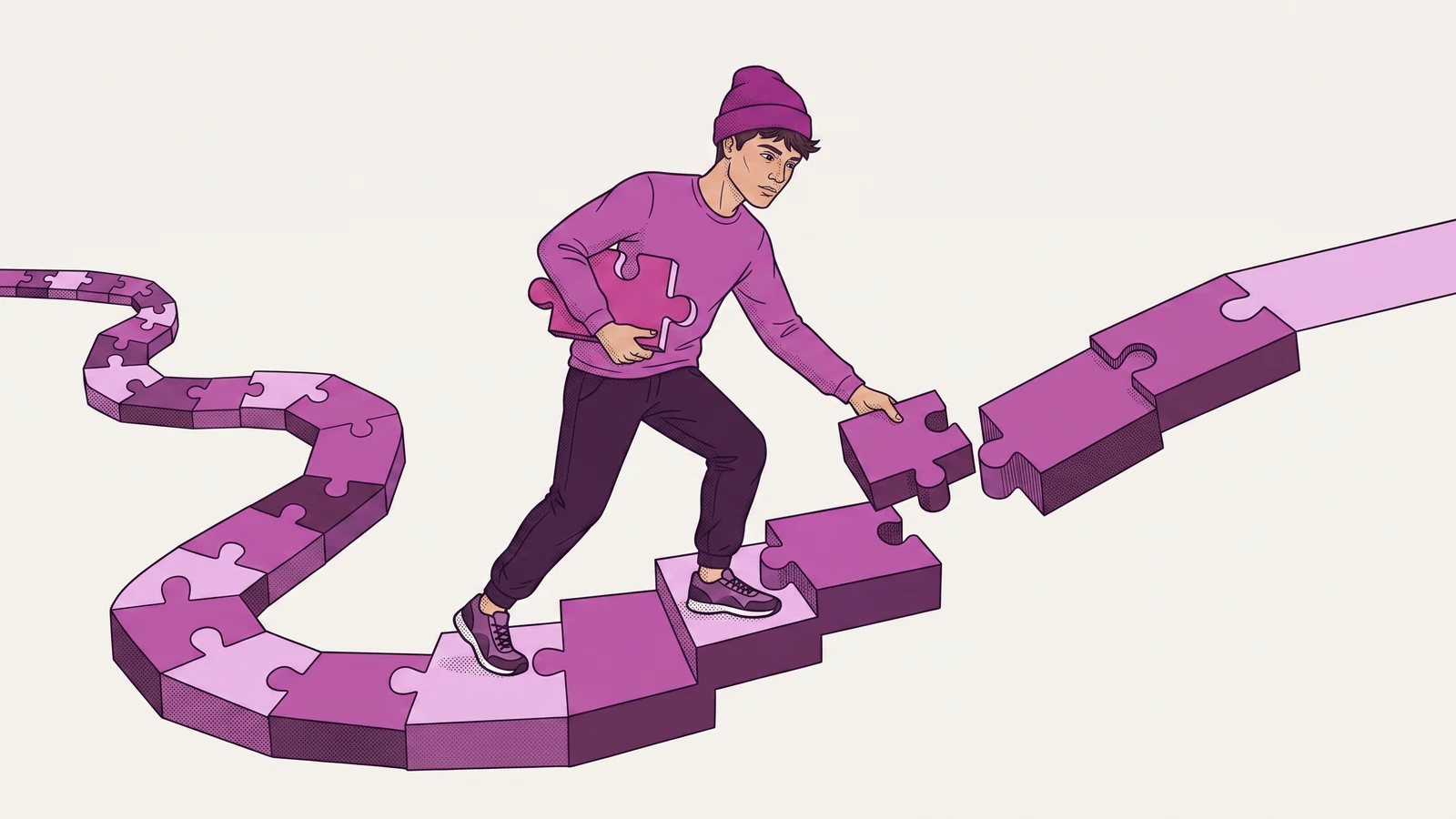
Starting is easy. Finishing is the skill. The project abandoned at 80%, the plan that fizzled in week two, these are the most common teen stories, and they're not a motivation problem. They're a competency still under construction.
At Altitude, this is Plans and Completes, one of seven competencies in the Thought domain. Here's how to help your young person build it.
What "Plans and Completes" Means
This competency is about turning intentions into finished work. For a young person, it looks like breaking a big task into steps, sequencing them sensibly, tracking progress, and seeing something through to the end, instead of abandoning it when the first burst of energy fades.
The two halves matter equally. Planning without completing is a wish list. Completing without planning is chaos. Together, they're how a teen makes things actually happen.
Why Finishing Is the Hard Part
The start of anything is fueled by novelty and motivation, both of which fade. What carries a project past the messy middle isn't more motivation; it's the skill of breaking the work down, tracking where you are, and taking the next small step even when the excitement is gone. That's a learnable skill, and watching a young person build it is one of the quiet satisfactions of these years.
How to Build It at Home
Hand over the planning. Instead of laying out the steps, let your teen break a real project down themselves, then reflect together on how the plan held up.
Shrink it to the next step. When a teen stalls, it's usually because the whole thing feels too big. "What's the one next step?" is often all it takes to get unstuck.
Make progress visible. A checklist, a tracker, a wall of sticky notes, seeing progress is fuel for finishing.
Celebrate the finish, not just the start. Notice and name completion: "You saw that all the way through." It teaches that finishing is the part that counts.
Resist rescuing the unfinished. Letting a young person feel the natural result of an abandoned task teaches more than a lecture, and makes the next finish more likely.
Frequently asked questions
How do I help my teen follow through and finish things?
Give them ownership of planning real tasks, help them shrink a stalled project to its next single step, make progress visible with a checklist or tracker, and celebrate completion specifically. Finishing grows when a young person practices it on things that matter to them, not when an adult carries the project for them.
Why does my teen start projects but never finish them?
It's extremely common: the start runs on novelty and motivation, which naturally fade, and the skill of pushing through the middle is still developing. The fix isn't more motivation but building the follow-through skill, breaking work into steps, tracking progress, and taking the next small action even when the excitement is gone.
Should I let my teen fail to finish something?
Often, yes, within reason. Feeling the natural consequence of an unfinished task teaches follow-through more powerfully than being rescued. Your role is to be the steady support beside them, not the one who quietly completes it for them.
Related Resources
From Altitude:
The goal isn't a teen who plans perfectly. It's one who finishes what matters, and that skill is built one followed-through project at a time.
Altitude opens to founding families in January 2027. Join the waitlist to be among the first families in Florida and Georgia.