

How to Help Your Teen Embrace a Challenge
Embracing challenge is choosing the stretch over the comfortable, and it's a learnable skill. Here's how to help your teen take on hard things.
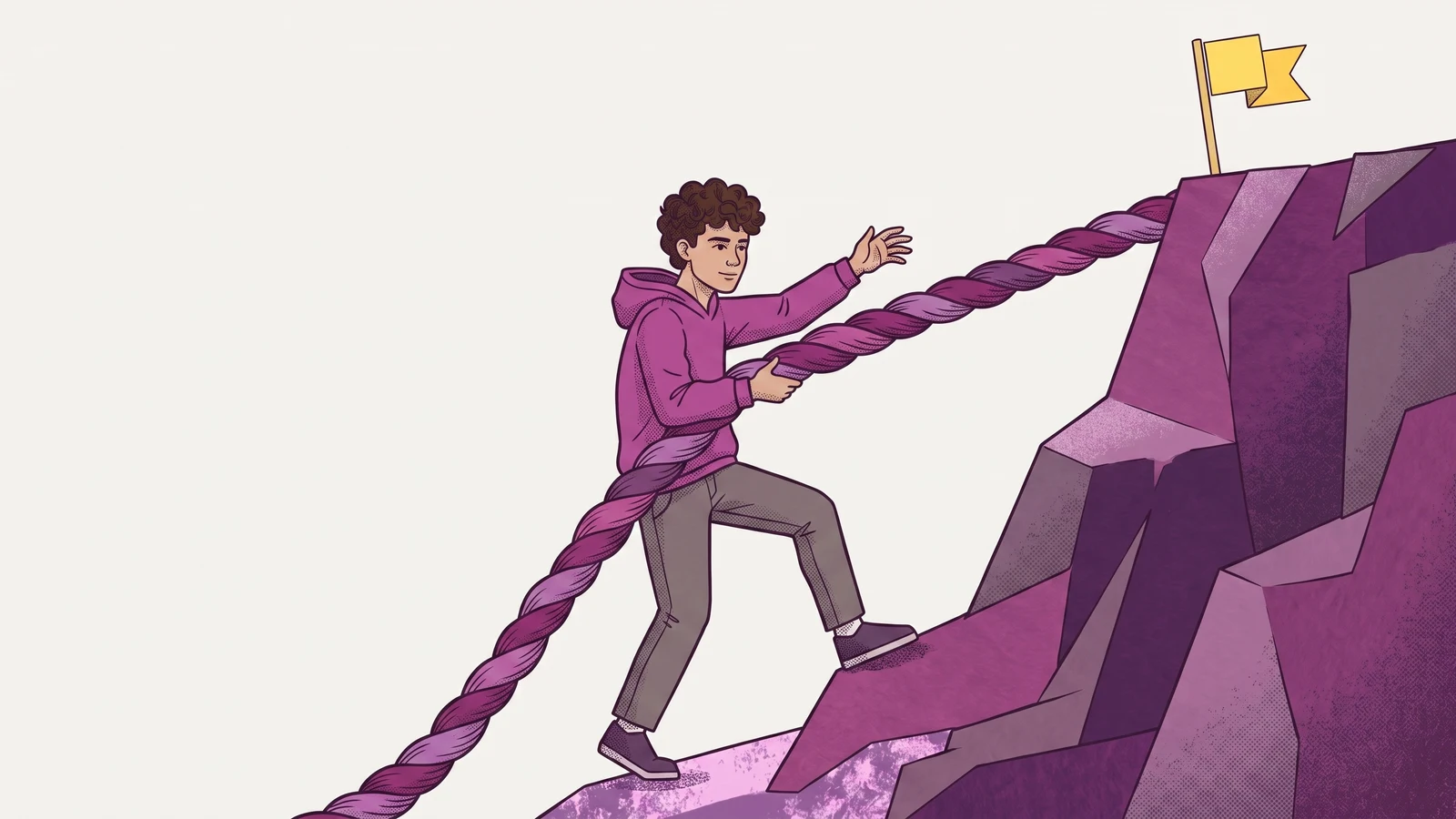
Some teens move toward a hard thing; many move away from it. Embracing challenge (choosing the stretch over the comfortable) isn't a personality type a young person is born with. It's a competency, and it can be built.
At Altitude, this is Embraces Challenge, one of five competencies in the Values domain. Here's how to help your teen develop it.
What "Embraces Challenge" Means
Embracing challenge is meeting difficulty as something worth doing. For a young person, it looks like being willing to attempt things that might not go well, treating a hard task as worthwhile rather than a threat, and stepping toward the stretch instead of toward the comfortable.
It's not recklessness, and it's not about loving difficulty for its own sake. It's the quiet willingness to try something hard because growth lives there.
Why Comfort Is the Real Risk
When a teen consistently chooses the easy, the safe, the already-mastered, their world quietly shrinks. The skills they don't stretch stay where they are; the things they're afraid of stay scary. The actual risk isn't failing at a hard thing. It's never attempting one. A young person who learns that challenge is survivable, even valuable, keeps growing in a way that comfort never allows.
How to Build It at Home
Normalize the discomfort of hard things. Let your teen know that the uneasy feeling at the start of something difficult is normal, not a signal to stop. Naming it takes away its power.
Praise the attempt, not just the success. "You went for it even though it was hard" rewards the behavior you want (reaching for the stretch) regardless of outcome.
Let them choose a stretch. Invite your young person to pick something a little beyond their current reach. Chosen challenge builds more than assigned challenge.
Model it yourself. Let your teen see you take on something hard and unfamiliar, and talk openly about the discomfort and what you learned.
Frequently asked questions
How can I help my teen take on challenges?
Normalize the discomfort that comes at the start of anything hard so it isn't a signal to quit, praise the attempt rather than only the success, and invite your teen to choose a stretch slightly beyond their current reach. Model taking on hard things yourself. Embracing challenge grows when a young person learns that difficulty is survivable and worthwhile.
Why does my teen give up easily or avoid hard things?
Often it's because difficulty feels threatening rather than worthwhile, a framing that can be shifted. When a young person learns the discomfort of a hard start is normal, gets credit for attempts rather than only outcomes, and experiences that challenge leads to growth, they become far more willing to reach for it. It's a skill in progress, not a fixed trait.
Should I push my teen to do hard things?
Gentle encouragement and opportunity work better than pressure. Rather than forcing a specific challenge, normalize discomfort, celebrate attempts, and give your teen a say in which stretches they take on. Chosen challenge builds the competency; forced challenge often builds resistance.
Related Resources
From Altitude:
Embracing challenge is choosing the stretch over the comfortable, and the real risk was never failing at a hard thing. It's never attempting one. Every challenge your teen chooses builds the competency a little more.
Altitude opens to founding families in January 2027. Join the waitlist to be among the first families in Florida and Georgia.