

How to Help Your Teen Work Well With Others
Collaboration isn't doing it all yourself, and it isn't disappearing. It's the skill in between, and your teen can build it.
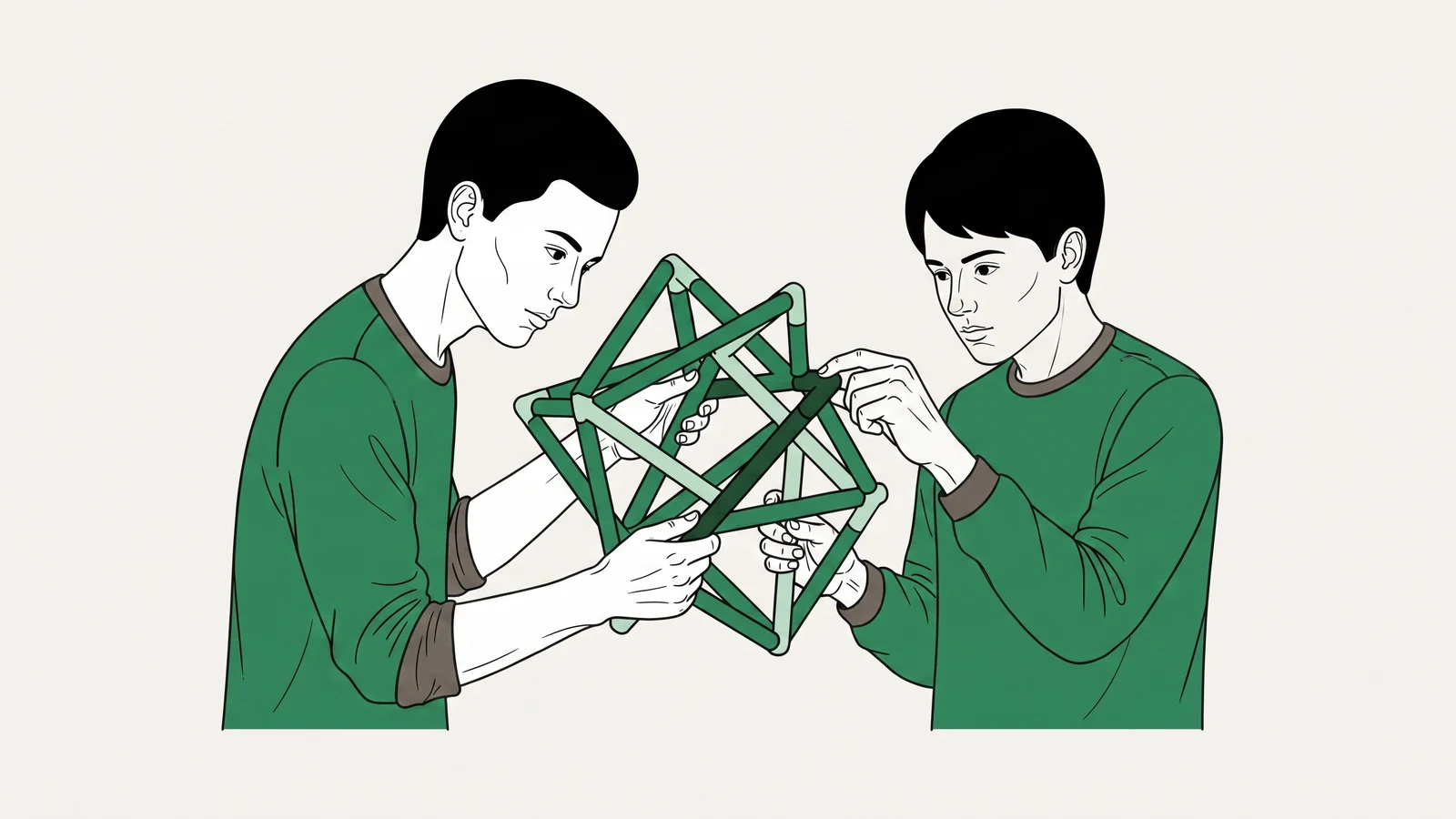
Group work tends to surface two types: the over-functioner who quietly does everyone's share, and the under-functioner who disappears and lets others carry it. Collaboration is the skill in the middle, contributing fully while making room for everyone else.
At Altitude, this is Collaborates, one of six competencies in the Social domain. Here's how to help your teen build it.
What "Collaborates" Means
Collaborating is working well alongside others toward a shared goal. For a young person, it looks like contributing their part, making space for other people's ideas, carrying their fair share of the work, and adapting when the group needs to change course.
It's a genuine balance, between asserting your own ideas and yielding to others', between leading a piece and supporting someone else's. That balance is exactly what makes it a skill worth building.
Why It Matters Beyond Group Projects
It's tempting to think of collaboration as a school-project nuisance. But the ability to work well with others runs through nearly every part of an adult life, jobs, teams, families, communities, anything built with other people. A young person who learns to contribute fully and make room for others has a capacity that pays off far beyond any assignment.
How to Build It at Home
Use real shared projects. Cooking a meal together, planning a trip, building something, anything with a shared goal and shared stakes is collaboration practice.
Name the over- and under-functioning gently. If your teen tends to take over, nudge them to make space: "What does everyone else think?" If they tend to vanish, nudge them to own a piece. Both are the same skill from opposite sides.
Let family decisions be collaborative. Where to go, how to solve a household problem, inviting your young person into real shared decisions builds the muscle.
Frequently asked questions
How can I help my teen work better with others?
Give them real shared projects with shared stakes, and gently name the balance: if they tend to take over, nudge them to make space for others' ideas; if they tend to disappear, nudge them to own a piece. Collaboration is the balance between asserting and yielding, and it grows through practice on things that actually matter.
My teen always ends up doing all the group work. How do I help?
The over-functioner is building only half the skill. Help them see that making space for others (asking what the group thinks, letting someone else carry a piece even imperfectly) is part of collaborating, not a failure to. Real teamwork includes trusting others with their share.
Is collaboration really that important if my teen prefers working alone?
Working independently is a strength, and not everything needs to be a group effort. But the ability to work well with others shows up across adult life (jobs, families, communities), so it's worth building alongside their independence, not instead of it.
Related Resources
From Altitude:
Collaboration isn't doing it all yourself, and it isn't disappearing. It's the skill in between, and every shared project gives your young person a chance to build it.
Altitude opens to founding families in January 2027. Join the waitlist to be among the first families in Florida and Georgia.