

Growth: The Continuous Process of Becoming
Growth isn't a destination. It's the ongoing work of becoming. Here's what real growth looks like for teenagers, why it's non-linear, and how to build it with intention at home.
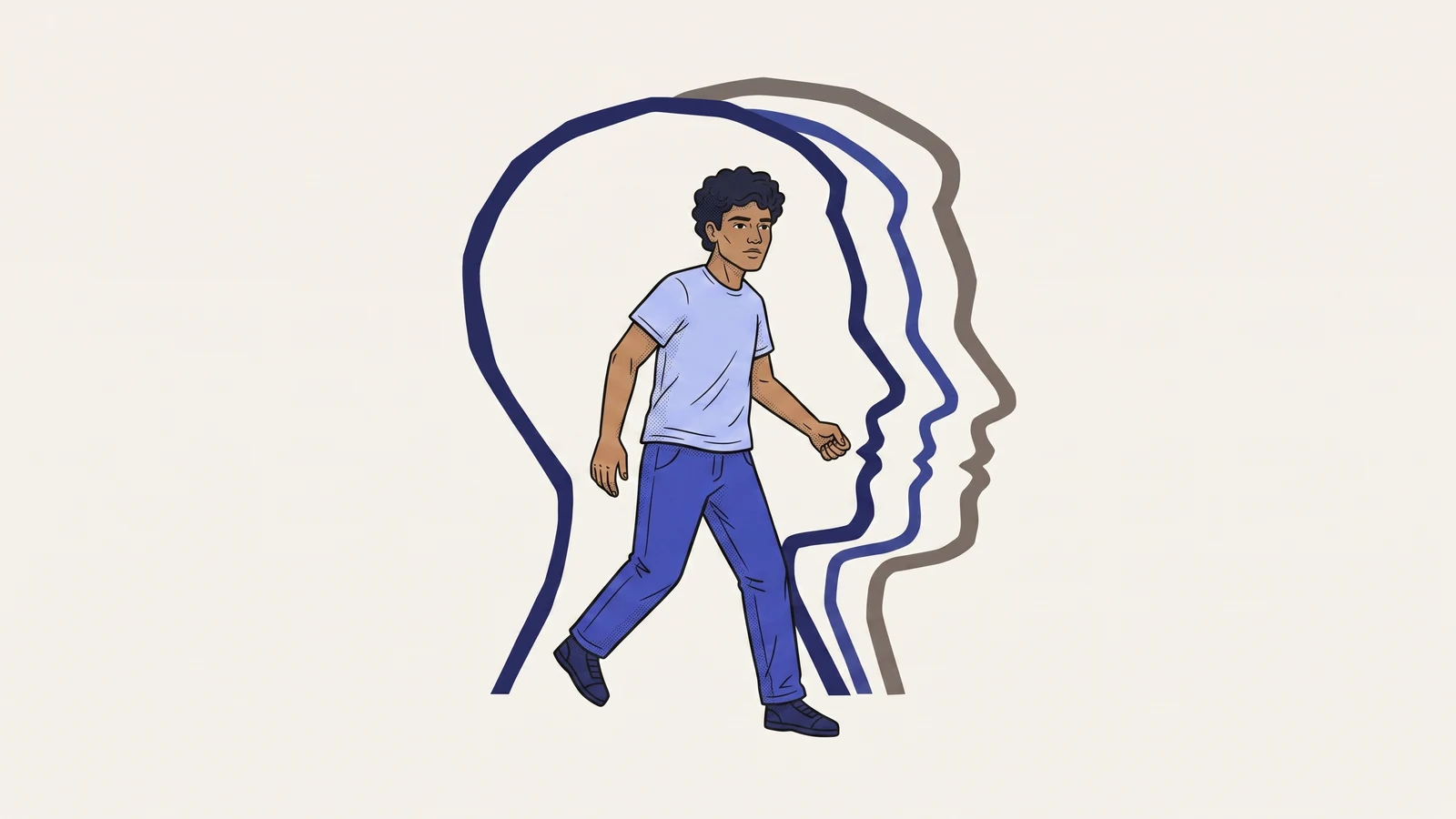
There's a version of growth that looks like a straight line, steady upward progress, milestone after milestone, until you arrive somewhere finished and complete.
That version isn't real.
Real growth plateaus. It loops. It accelerates in unexpected moments and stalls when you expect to breeze through. It looks like a stair-step, not a slope, stretches of steady effort, then a sudden step forward, then another stretch.
For a teenager in the middle of it, this can feel like failure. It isn't. It's what becoming actually looks like.
Growth Is Not a Destination
You've probably heard the phrase "growth mindset." The idea that believing you can improve actually helps you improve, that effort matters as much as ability, that challenges are opportunities rather than threats.
That idea is right as far as it goes. But Altitude's approach to growth goes further.
A mindset is a belief. Growth, at Altitude, is a value, a way of moving through the world over time. It's not something you adopt once and carry with you as a fixed orientation. It's something you practice, revisit, and deepen through every challenge, every setback, every moment where forward is harder than stopping.
At Altitude, Growth is one of three core values, alongside Agency and Excellence:
Every challenge is a chance to improve. Growth means embracing progress step by step, building skills, and unlocking potential.
The key phrase: step by step. Not all at once. Not in one breakthrough. In the accumulated work of showing up, again and again, and building something over time.
The Shape of It
Look at the Altitude logo. Three converging shapes, forming a descending stair-step.
That shape is a philosophical statement.
Most representations of growth show a curve going up and to the right, smooth, accelerating, eventually reaching a summit. That's an inspiring image. It's also misleading about what the actual experience of growth feels like from the inside.
The stair-step is more honest. There are flat stretches, periods where you're working hard and nothing seems to be shifting. Then a step: something clicks, something deepens, something you've been practicing finally becomes something you just do. Then another flat stretch, another step.
And critically: there's no summit. The path keeps going. That descending stair-step doesn't terminate at a peak. It continues, because the person who gets good at something discovers new edges to develop at the next level.
Becoming, not arriving. That's the design principle behind everything Altitude builds. Not a platform that delivers you to a finished state, but one that equips you to keep going (deeper, better, more capable, more yourself) for as long as you choose to.
Why Growth During Adolescence Is Different
The teenage years are a specific kind of growth window, not better or worse than others, but different in ways that matter.
Between 13 and 18, everything is in motion at once. Identity is forming. Social worlds are expanding and getting more complex. The stakes of decisions are rising. The relationships between effort and outcome are becoming more visible.
This is the window when the story a young person tells about themselves gets written. Am I someone who pushes through difficulty, or someone who avoids it? Am I capable of more than I've already shown, or is this about as far as I go?
Those stories aren't destiny. But they do become habits of mind that shape how a person engages with challenge for a long time afterward.
The families who understand this (who see adolescence as a growth window to be cultivated rather than a phase to survive) are the ones who approach development with the same intentionality they bring to their teen's academics.
That's the family Altitude is built for.
The Homeschool Parent Lens: Measuring Becoming, Not Transcripts
One of the liberating things about homeschooling is the freedom to measure what actually matters.
Traditional schooling measures a narrow slice of a young person's development, academic content mastery, expressed as grades and scores. That slice is real. It just isn't the whole picture.
Homeschool families often know this intuitively. They see their teenager navigating something hard with more composure than last year. They watch their young person stick with a project through frustration instead of quitting. They notice when their teen handles a conflict differently, with less defensiveness, more self-awareness.
That's growth. It's happening all the time, in domains that no transcript captures.
Altitude gives families a structure to see that growth more clearly and develop it more intentionally. The Whole Human Framework (31 competencies across six domains) creates a shared language for the development that's already occurring and a clear path for deepening it.
When you can name what you're watching grow, you can support it more effectively. And when a young person can see their own progress in specific, named competencies, growth becomes something they can participate in consciously, not just something that happens to them.
The Teen Lens: Every Challenge Is a Chance to Improve
For the young person in the middle of their own becoming, growth is less about philosophy and more about the moment right in front of them.
The moment they hit something that doesn't come easily. The moment they fail at something they cared about. The moment they're tempted to walk away from something hard.
Those moments are not interruptions to growth. They are growth, in its most concentrated form.
What makes the difference is what happens in that moment, and what the young person has learned to do with difficulty. Does challenge signal that they've reached their limit? Or does it signal that there's something here worth developing?
Altitude is built around the second answer.
The Whole Human Assessment (the starting point for every learner on Altitude) surfaces strengths across 31 competencies and creates a personalized picture of where each young person already is. Not to categorize them. To give them a starting point that's theirs, and a clear sense that there's more to build from here.
From there, each learner works through experiences designed around how they actually learn, through their Altitude Coach, in a voice matched to how they receive feedback and engage with challenge. The path adapts to them. The work is real.
And every step of the path is designed around the same belief: every challenge is a chance to improve.
How Altitude Develops Growth
Growth across the Whole Human Framework isn't mapped to a single competency. It's distributed across several that work together. The competencies most central to what Altitude means by Growth:
- Embraces Challenge (Thought): choosing to engage with difficulty rather than retreat from it. The foundational habit of growth: treating hard things as development opportunities.
- Sustains Determination (Thought): keeping going when the initial motivation fades. Growth is sustained, not just sparked.
- Commits to Learning (Values): a commitment to ongoing development as a value, not just an activity. The difference between a young person who's currently learning and one who is a learner.
- Adapts to Change (Mindset): growth requires adjusting when what used to work stops working. Adaptability is the mechanism that converts disruption into development.
- Engages Fully (Mindset): presence. The opposite of going through the motions. Full engagement is what turns experiences into growth.
- Believes in Self and Growth (Identity): the belief that effort shapes outcome. Without this, the other competencies have no foundation. With it, the stair-step keeps going.
- Shows Gratitude (Mindset): an underrated growth competency: the capacity to notice progress, appreciate the process, and find meaning in the accumulation. Growth without appreciation is exhausting. With it, it becomes sustaining.
Each of these is developed at Altitude through personalized learning experiences, matched to the learner's strengths, Coach voice, and development path. Practice, reflection, and consistency over time.
What Growth Looks Like Day-to-Day
Growth doesn't usually announce itself. It accumulates in small, often unremarkable moments.
A teenager with developing growth capacity:
- Encounters a hard problem and stays with it longer than they used to
- Talks about a setback in terms of what they learned, not just what went wrong
- Sets a new challenge for themselves before completing the current one
- Reflects on how they've changed, and can name specific ways
- Treats feedback as information rather than evaluation
These patterns don't appear all at once. They develop unevenly, in some areas before others, with occasional regression. That's the stair-step, not a smooth line, but consistent forward direction over time.
That direction is what Altitude is built to support.
Frequently asked questions
What does growth mean at Altitude, isn't this just growth mindset?
Altitude's approach to Growth goes further than a mindset. A mindset is a belief; growth at Altitude is a lived value, a way of engaging with challenge, setback, and development over time. It's embodied in specific competencies across the Whole Human Framework and developed through consistent practice, not just adopted as an outlook.
Why is growth non-linear for teenagers?
Adolescent development doesn't follow a smooth curve. Different competencies develop at different speeds, in response to different experiences. What looks like a plateau is often consolidation, the period before a step forward. Understanding this helps families support their young person without reading stalls as failure.
How is growth measured at Altitude?
Not by grades or peer comparison. Altitude tracks competency development over time, showing each learner how they're progressing across the 31 competencies of the Whole Human Framework, relative to their own starting point. Growth is personal, not ranked.
What's the difference between growth and just getting better at things?
Getting better at specific skills is part of it. But growth in Altitude's sense is broader. It's the development of the whole human across six domains, including how a person relates to challenge itself. A young person who develops the capacity to embrace challenge has something that compounds across every area of their life.
How does Altitude help teens who resist growth or shut down under pressure?
Altitude starts with strengths, showing each young person what they're already good at before asking them to develop further. Experiences are personalized to how they learn best, through an Altitude Coach voice matched to how they receive feedback. The combination of strengths-first framing and voice-matched delivery tends to reduce resistance and increase engagement over time.
When does Altitude launch?
Altitude opens to founding families in January 2027. The waitlist is open now at on-altitude.com.
The stair-step keeps going.
That's the promise at the center of everything Altitude builds: not that your young person will arrive somewhere finished, but that they'll have what they need to keep becoming, step by step, challenge by challenge, further than they've been before.
Altitude opens to founding families in January 2027. Join the waitlist to be among the first families in Florida and Georgia.