

Agency: Helping Young People Own Their Path
Agency in young people means taking ownership of decisions, direction, and growth. Here's what it looks like, why it matters for teens, and how homeschool families can build it intentionally.
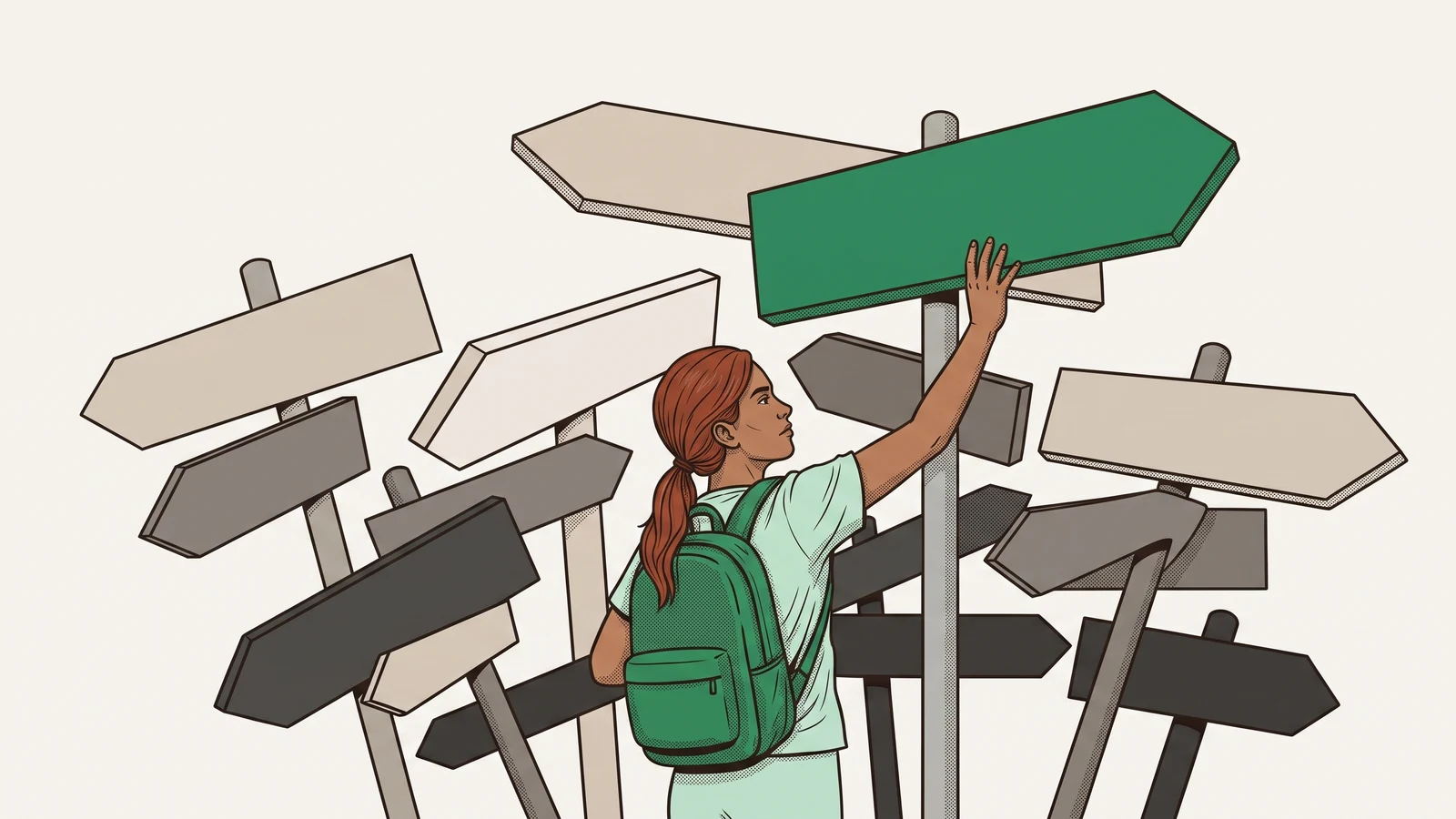
Every choice a young person makes shapes who they're becoming.
The question isn't whether that's happening. It always is. The question is whether they know it.
Agency is the capacity to participate actively in your own development. To move from waiting to see what happens to deciding what you're going to do about it. From being shaped by circumstance to being the person who shapes the circumstance.
For a young person, this isn't a nice-to-have. It's the foundation everything else is built on.
What Agency Actually Is
Agency is one of the most overused words in education, and one of the most underdelivered.
When most programs talk about agency, they mean giving young people choices: which topic to study, which project to pick, which seat to sit in. That's autonomy in the moment. It's not the same as agency.
Real agency is deeper. It's the internalized belief that your actions matter, that the choices you make, the effort you put in, the way you show up have actual consequences for your life. It's the move from passive to purposeful.
At Altitude, Agency is one of three core values, alongside Growth and Excellence:
Every choice shapes the path ahead. Agency means owning decisions, taking responsibility, and learning that growth comes from within.
That last phrase matters: from within. Not from a grade. Not from a parent's approval. Not from external validation. From a young person's own growing understanding of who they are and what they're capable of.
What Agency Is Not
Before going further, it's worth clearing up a few things agency is often confused with.
Agency is not independence from guidance. A young person can exercise deep agency while still working closely with a parent, coach, or mentor. Agency is about who drives the process, not about eliminating support.
Agency is not confidence. Confidence is a feeling. Agency is a capacity. You can act with agency while feeling uncertain. In fact, choosing to act despite uncertainty is one of the clearest expressions of it.
Agency is not defiance. Some young people push back on structure as a way of asserting control. That's not agency. It's reaction. Agency is proactive. It's choosing, not just resisting.
And critically: agency is not a personality trait. It's not something some kids are born with and others aren't. It's a competency. It can be developed, practiced, and strengthened over time.
Why Agency Matters for Teenagers Specifically
Adolescence is when the question "who am I and what am I doing with my life?" starts getting serious. Between ages 13 and 18, young people are taking on more responsibility, navigating more complex social dynamics, and beginning to make decisions that actually have consequences.
This is exactly when a young person either learns that their choices matter, or learns to outsource their decisions and wait to be told what to do.
The habits formed in this window follow them forward. The teenager who learns to take initiative, make decisions they own, and recover from mistakes with self-reflection rather than blame is building something durable. The one who never develops those capacities will eventually hit circumstances that force the question, usually at a harder time.
The window is now. The question is what to build inside it.
The Homeschool Parent Lens
Here's something worth naming: homeschool families already live agency.
You made a deliberate choice to do education differently. You didn't default to the system. You evaluated it, decided it wasn't the right fit for your family, and built something intentional in its place. That takes real agency.
And in doing so, you created a structure where your young person has more room to develop their own: more flexibility, more relationship, more opportunity to try things, reflect, and try again.
But agency in a young person doesn't develop automatically from a flexible schedule. It requires intentional cultivation. Specifically, it requires:
Naming it. When your teen makes a choice that works out (or one that doesn't) naming what happened. "You took initiative there." "You owned that decision." Language makes invisible growth visible.
Stepping back. Parental competence can inadvertently steal agency from a young person. When we step in before they've had a chance to struggle, we remove the space where initiative would have grown.
Letting consequences land. Not manufactured consequences, real ones. The natural feedback loop of choices and outcomes is one of the most powerful teachers of agency available.
Connecting choices to identity. Agency deepens when a young person starts to see themselves as someone who acts rather than reacts. That self-concept is built through repeated experience of making choices and seeing them matter.
Altitude is built to support exactly this process, to give your young person a structured space to practice agency in a context designed for it.
The Teen Lens: From Passive to Purposeful
For the young person themselves, agency often arrives as a realization rather than an instruction.
It's the moment they notice that the way they showed up in a hard conversation actually changed the outcome. That the effort they put into something they cared about produced something real. That the decision they made (their decision) led somewhere.
Those moments compound. Each one becomes evidence of the central truth agency rests on: what I do matters.
At Altitude, the young person's journey starts with the Whole Human Assessment, 124 questions that surface how they already show up across 31 competencies. Not to evaluate them. To show them. To give them a language for what's already strong and a clear picture of where they're headed.
That starting point (strengths first, built around who you already are) is itself an act of agency. You're already becoming. Altitude helps you do it with intention.
How Altitude Builds Agency
Agency isn't a single competency. It's the outcome of several working together. Across the Whole Human Framework, a cluster of competencies directly support the development of agency:
- Takes Initiative (Mindset): acting without waiting to be prompted. Identifying what needs to happen and starting.
- Plans and Completes (Thought): translating intention into follow-through. The gap between "I want to" and "I did" is where agency either develops or stalls.
- Practices Self-Control (Thought): choosing the better action when the easier one is right there. Agency requires the ability to regulate impulse in service of intention.
- Believes in Self and Growth (Identity): the bedrock belief that effort and choice have outcomes. Without this, agency has no ground to stand on.
- Knows Self (Identity): you can't own your path if you don't know where you're trying to go, or what you value when choices get hard.
- Lives with Purpose (Identity): agency pointed toward something meaningful is far sturdier than agency in the abstract.
- Acts with Integrity (Values): owning your choices includes owning the ones that didn't go the way you hoped. Integrity is agency with accountability built in.
These aren't taught in isolation at Altitude. They're developed through a personalized sequence of learning experiences (each matched to how the learner actually learns, through their Altitude Coach) and reinforced through practice, reflection, and visible growth over time.
What Agency Looks Like in Practice
It's worth making this concrete, because agency can sound abstract until you see it in everyday moments.
A teenager with developing agency:
- Starts a task without being asked, not every time, but increasingly
- When something goes wrong, their first question is "what could I do differently?" not "whose fault is this?"
- Makes a decision, owns it, and adjusts based on what they learned, without needing someone to tell them the outcome was okay
- Has opinions about what they want to work on and can articulate why
- Handles uncertainty without shutting down
None of this looks dramatic. It accumulates quietly, over time, through hundreds of small moments where a young person chooses to engage rather than disengage, to own rather than deflect, to move rather than wait.
That accumulation is what Altitude is built to support.
Frequently asked questions
What does agency mean for teenagers?
Agency for a teenager means taking real ownership of their decisions, effort, and development, not just making choices within a defined menu, but developing the internalized belief that what they do has consequences for who they become. It's the shift from passive to purposeful.
How is agency different from confidence?
Confidence is a feeling about what you're capable of. Agency is a capacity, the ability to act, choose, and own outcomes regardless of how confident you feel. A young person can develop real agency while still feeling uncertain, and often does.
Can agency be taught, or is it a personality trait?
Agency is a developable competency, not a fixed trait. Like any competency, it builds through practice, experience, and reflection, and it's most effectively developed during adolescence, when the habits around decision-making and ownership are still being formed.
What's the parent's role in developing agency in a teen?
Parents support agency development most powerfully by stepping back at key moments, naming what they see ("that was you taking initiative"), letting natural consequences land, and connecting choices to identity over time. Altitude gives families a shared framework and language to make this more intentional.
How does Altitude specifically develop agency?
Through a cluster of competencies in the Whole Human Framework: Takes Initiative, Plans and Completes, Believes in Self and Growth, Knows Self, Lives with Purpose, and others. Each is developed through personalized learning experiences matched to the learner's strengths and Coach voice.
When does Altitude launch?
Altitude opens to founding families in January 2027. The waitlist is open now at on-altitude.com.
Every choice shapes the path ahead.
For the young people Altitude is built for, that's not a pressure. It's a possibility. Agency means their path is actually theirs to walk.
Altitude opens to founding families in January 2027. Join the waitlist to be among the first families in Florida and Georgia.