

How Precision Development Works at Altitude
Precision Development is how Altitude personalizes each teen's development path, from the Whole Human Assessment to a strengths-based learning sequence delivered through their matched Altitude Coach. Here's how it works.
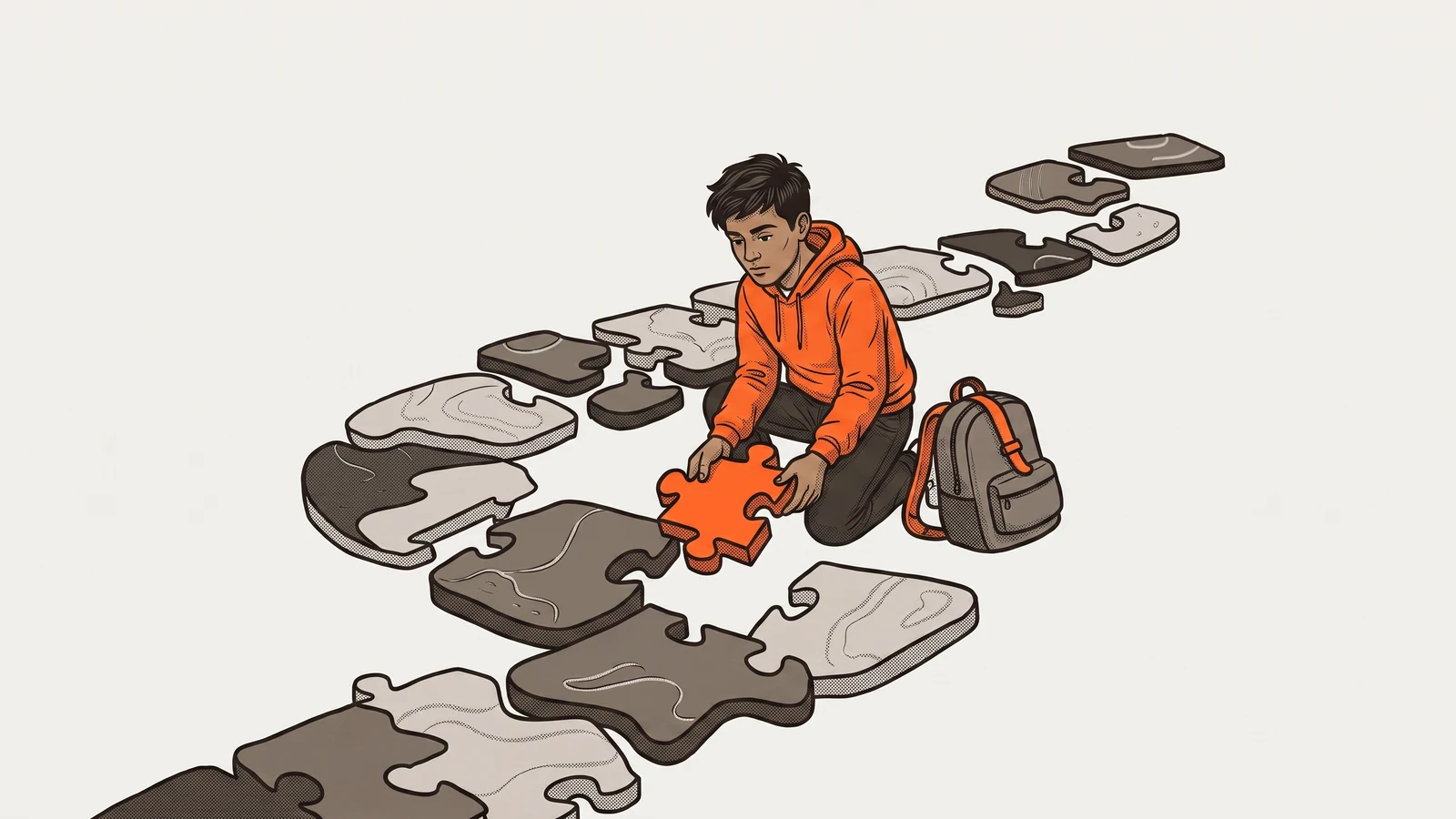
Every young person who comes to Altitude arrives with their own particular mix of strengths, development needs, and ways they learn best.
No two are the same. So a single sequence (the same path for everyone) will never be the right path for anyone.
That's the problem Precision Development is built to solve.
What Precision Development Is
Precision Development is the system that powers personalization at Altitude. It's what makes the platform different from a curriculum (where everyone follows the same sequence in the same order) and different from a generic coaching program, where advice is general rather than specific to the person.
In practice, Precision Development means three things:
Your teen's development path is built around their specific strengths profile, not a default sequence, not a grade level, not what the average teen needs. What this teen needs, based on where they actually are across 31 competencies.
The coaching voice is matched to how they learn. Not every young person responds to feedback the same way. Some need challenge and directness. Others need encouragement and affirmation. Precision Development starts by matching each learner with an Altitude Coach whose voice fits how they grow.
The experiences adapt over time. As a young person develops, their path reflects that growth. The system is designed to keep the work developmentally appropriate and continuously meaningful, not to stay fixed once it's set.
Step 1: Coach Match
Before any content, before any learning path, Altitude begins with a Coach match.
Every learner takes a short quiz that identifies how they prefer to receive feedback, how they engage with challenge, and what kind of voice they respond to. Based on their answers, they're matched with their Altitude Coach, one consistent guide throughout their experience.
Altitude has six Coach voices, each representing a distinct style of mentorship. Some are direct and high-expectation. Some are warm and encouraging. Some are steady and reflective. All of them develop the same 31 competencies. The coaching voice is about how, not what.
This matters because the same guidance lands differently depending on who's delivering it. A coaching voice that energizes one teen might shut another one down. Precision Development starts here (with the relationship) before anything else.
Step 2: Discovering Your Strengths
Once the Coach is matched, every learner moves through Altitude's entry course: Discovering Your Strengths.
At the center of this course is the Whole Human Assessment, 124 questions that surface how a young person already shows up across all 31 competencies of the Whole Human Framework.
The output is a personal Whole Human Report: a strengths profile organized across all six domains (Thought, Emotion, Social, Values, Mindset, Identity), sorted from each learner's greatest strengths to their greatest opportunities for growth.
This is not a diagnostic. It's not a grade, a ranking, or a comparison to other teens. It's a developmental picture, specific, personal, and built to serve as the foundation for everything that follows.
A parent reading their teen's Whole Human Report will see, for the first time, a complete picture of who their young person is across the full range of human competencies. Not just how they perform academically. Who they actually are.
Step 3: The Personalized Path
With a Coach match and a Whole Human Report in hand, each learner is placed on their personalized development path.
The path is built from Pathways, each Pathway pairs a Course with a Challenge. The Course delivers the learning; the Challenge applies it. Together they develop specific competencies in a complete cycle: understand, practice, reflect, grow.
The sequence of Pathways a learner works through is not random. It's organized around their strengths profile, building from what they already do well, addressing their development opportunities in an order that makes sense for who they are.
Beyond Pathways, learners have access to a full range of experience types:
- Courses: Structured learning experiences built around specific competencies, delivered through Coach Audio and interactive content.
- Challenges: Applied practice that takes what a learner built in a Course and puts it to work in real situations.
- Workshops: Focused, shorter-format experiences around a specific skill or moment.
- Flows: Guided practice sequences that build a habit or routine over time.
- Tools: Quick, in-the-moment resources a learner can reach for when they need them, from a 30-second breathing exercise to a decision-making framework.
All of it is delivered through the learner's Altitude Coach voice. The experience feels personal because it is.
What This Looks Like for Your Teen
It's worth making this concrete, because "personalized learning" is a phrase that gets overused.
Two teens using Altitude will have meaningfully different experiences, not just in what they're working on, but in how they're coached, what experiences they're matched with, and how their path evolves.
Teen A comes in with strong competencies in Builds Relationships and Sustains Optimism, and lower scores in Plans and Completes and Thinks Critically. Their path prioritizes the Thought domain early, paired with a Coach voice that's structured and goal-oriented. Their Pathways lean into planning and critical thinking before asking them to stretch into competencies further from their natural strengths.
Teen B comes in strong in Focuses and Plans and Completes, with more room to grow in Knows Self and Lives with Purpose. Their path moves into the Identity domain early, paired with a reflective, affirming Coach voice. Their experiences lean into self-knowledge and purpose before building outward.
Same platform. Very different paths. That's Precision Development.
Why This Matters for Homeschool Families
Homeschool families already understand the core principle here: one size doesn't fit all. That's part of why you chose to homeschool in the first place.
Altitude extends that logic to human development. Just as you've chosen a curriculum that fits how your teen learns academically, Altitude builds a development path that fits who they actually are.
But there's something else worth naming. Most homeschool parents are expert at personalizing the academic side of their young person's education. The human development side (the Thought, Emotion, Social, Values, Mindset, and Identity domains) is harder to personalize on your own. You don't have an assessment tool for it. You don't have a structured framework. You don't have a Coach voice matched to your teen.
Altitude fills that gap. Not to replace the relationship between parent and young person, but to give the young person a structured developmental space where they receive personalized coaching and support that complements what you're already doing.
The result is a teen who isn't just on a personalized academic path, but on a personalized development path too. And as your young person grows, their path reflects it.
Frequently asked questions
What is Precision Development?
Precision Development is Altitude's personalization system, the mechanism that matches each learner's unique competency profile to their specific development path, Coach voice, and learning experiences. It's what makes Altitude different from a standard curriculum: the path is built for the individual, not a generic sequence.
How does the Whole Human Assessment feed into the personalized path?
The assessment reveals each learner's strengths and development opportunities across 31 competencies. Those results directly shape which Pathways they work through, in what order, and with what coaching emphasis. The assessment is the foundation everything else is built on.
What is an Altitude Coach?
An Altitude Coach is one of six distinct coaching voices available on the platform, each representing a different style of mentorship. Every learner is matched with a Coach voice at the start of their experience, and that Coach is their consistent guide throughout. The Coach voice determines how learning is delivered: direct or affirming, structured or exploratory, high-challenge or high-support.
How is this different from a personalized curriculum?
Academic personalization usually means adjusting pacing or content level. Precision Development goes further. It personalizes the competencies being developed, the coaching voice doing the developing, and the type of learning experience used, based on who the learner actually is across 31 dimensions of development.
Does the path change as my teen develops?
Yes. As a learner progresses through competencies, their path reflects that growth. Precision Development is designed to stay developmentally appropriate over time, not to stay fixed at the starting point.
What is a Pathway?
A Pathway is a pairing of a Course and a Challenge. The Course delivers structured learning around specific competencies; the Challenge applies that learning in practice. Learners move through a sequence of Pathways personalized to their strengths profile and Coach voice.
When does Altitude launch?
Altitude opens to founding families in January 2027. The waitlist is open now at on-altitude.com.
One starting point. One strengths profile. One Coach voice. One path, built for your young person, adapted as they grow.
That's what Precision Development delivers. Not the right curriculum. The right development.
Altitude opens to founding families in January 2027. Join the waitlist to be among the first families in Florida and Georgia.